
One stamp for every $12
Eight stamps and the 18-piece platter is free: roughly $96 of purchases. The lunch bowl moves one box, the big platter five. It's the app's amount rule, typed at the counter before the scan.
Sushi, poke bowls and Japanese takeout
Updated
At lunch, a $13 salmon avocado bowl for the office across the street; on Saturday night, a 40-piece platter for four. One stamp each rewards the small ticket as much as the big one. By amount, the card follows what your customers actually spend.
Create my shop's card See the price
One month free to try it, nothing to plug in at the counter.
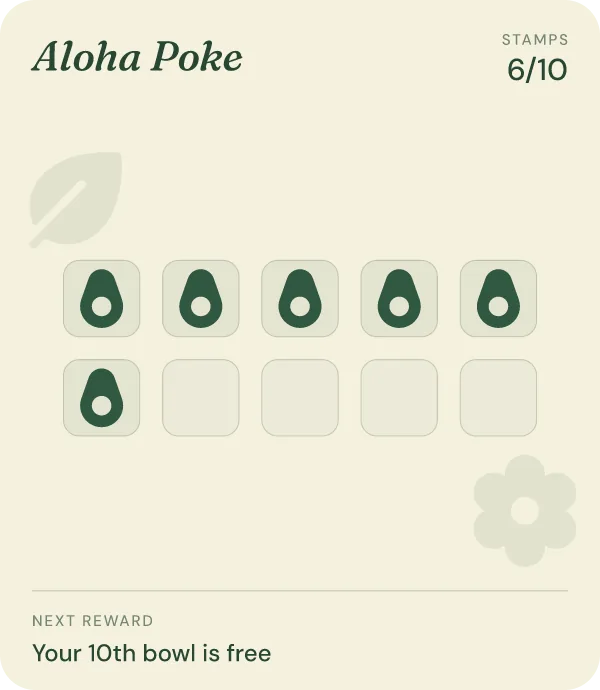
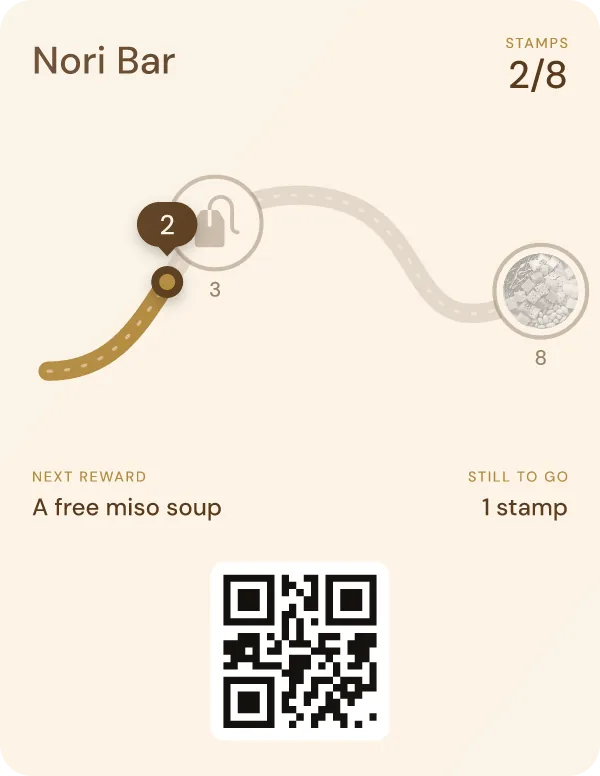
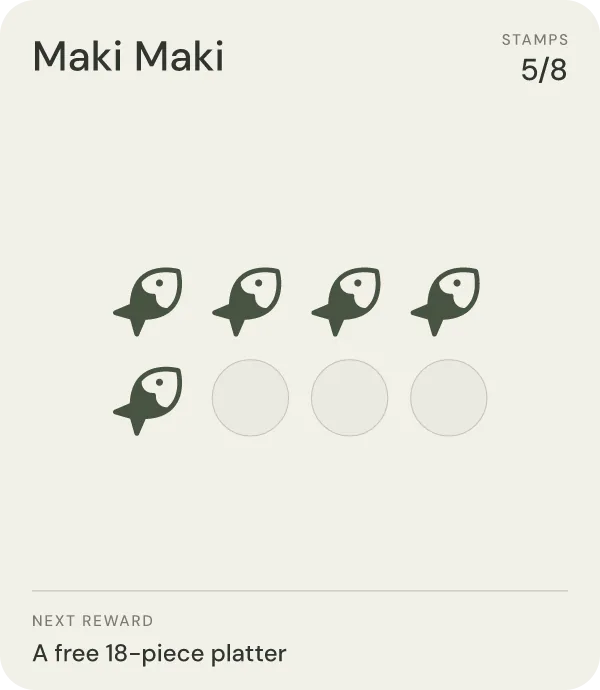
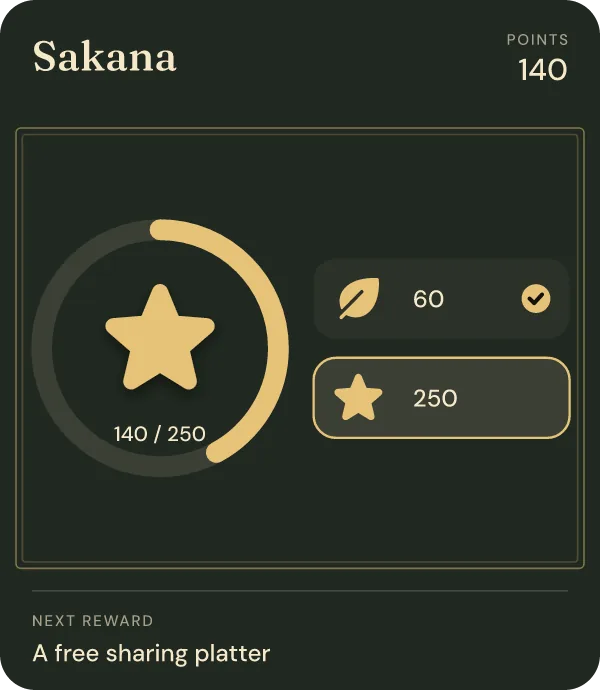
It comes down to how far apart your tickets are. If most customers grab one bowl at lunch, a stamp per visit is enough. If the same person buys a $13 bowl on Tuesday and a $64 platter on Saturday, count by amount: one stamp for every $12, typed at the counter before the scan. A franchise often comes with its own mandatory program; for an independent shop, StampyWallet does both, in Apple Wallet and Google Wallet, from €20 excl. VAT a month in Europe ($29 in the US) as of October 22, 2026, and €40 ($49) to target customers close to their reward.
StampyWallet is a digital loyalty card for independent businesses, sushi counters and poke bars included. Customers add it to their phone by scanning a QR code, with no app. At pickup you type the ticket amount or a number of stamps, then aim at their card: the app does the math and updates the Wallet right away.
$12 = 1 stampA sample rule: the lunch bowl earns one stamp, the Saturday platter earns five.
Rounded down$37 makes three stamps and the leftover dollar doesn't carry over: nobody argues about an invisible balance.
1 or 2 stampsThe gap that puts a customer in the "Close to the reward" group, the first people worth messaging.
The reward
Fish is expensive: a discount on the check eats into the margin of every ticket. Better to give a product you control once a set amount has been spent. Three setups that fit both crowds, the rushed lunch and the platter to share.
Eight stamps and the 18-piece platter is free: roughly $96 of purchases. The lunch bowl moves one box, the big platter five. It's the app's amount rule, typed at the counter before the scan.
For a poke bar where tickets look alike: one stamp per visit, two tiers. The free soup comes after three lunches, early enough to keep the card top of mind.
Points mode, when you want finer tiers: edamame at 60 points, the sharing platter at 250. The amount is typed before you aim, and the card shows the total in points.
Name the reward precisely: "one 18-piece platter, chef's selection, bluefin sashimi excluded." The customer knows what they're working toward, your staff knows what to serve.
At pickup
Most customers leave with a bag. The move happens when they pay or pick up: type the ticket amount once, then aim at the card like a camera.
1The customer shows the cardThey open it in their Wallet while you close the bag.
2The screen shows the countWith the amount typed, it shows how many stamps will land before you confirm.

3The Wallet keeps upThe card updates on their phone, with a notification on the lock screen.
Amount first, card secondThe phone stays set to amount from one customer to the next; the sum itself clears after every scan, so a $64 platter never gets credited to the next person.
The coworker picking up for the floorSix bowls paid by one person? Type the total: their card moves forward. The others get theirs scanned next time they pay.
Register and sushi chef, each with a phoneInvited by a link, your staff only see the scanner. Not the customer list, not the week's numbers.
Tickets that don't look alike
The amount rule turns a ticket into stamps without changing the move: you type the amount, the screen shows the math, you aim. Here's what a $12 rule does to three tickets from the same week.
Rounded down, no leftoversThe remainder isn't kept anywhere, just like a paper card that says "1 stamp per $12." Customers read exactly what they have on their card.
Under the rule, the screen says soA $9 soup earns nothing, and the scanner shows it before you aim. No stamp goes on "to be nice" unless you decide it.
A typo costs littleTyped 380 instead of 38? One visit adds 50 stamps at most, and the screen says so before the scan. You fix it before confirming.
One visit away
A customer close to a free platter is the easiest one to bring back. The Messages screen puts them in their own group, and the card can let them know on its own when only one box is left.
A group that updates itself"Close to the reward" is recalculated each time you open the Messages screen. It works with stamps, per visit or by amount; on points it stays empty. On Growth.
"One more stamp", once per cardThe automatic reminder goes out when one box is left, once per full card, and waits for your allowed hours. Not the same second: at the counter the customer just heard it.
Your best customers, in dollarsWhen you type amounts, the "Best customers" group ranks the top 20% by spend over 90 days, not just the most frequent visitors.
Gift cards
For a birthday or a farewell lunch: sell a gift card for an amount at the counter. The recipient gets it by email, or by text where texting is available, with the buyer's note, adds it to their Wallet and spends it in one go or several, balance kept up to date. On Growth.
of $60
Sakana
Sakana : Lina sent you a gift card! Add it to your phone: https://s.stampywallet.com/k7Qm2pXa
Sent when sold
Pricing
No hardware, no setup fee. Unlimited customers, cards and staff on every plan.
For an independent shop ready to move from paper to Wallet.
€20 excl. VAT / month
Billed monthly. No commitment.
Try EssentialIncluded in this plan
Most chosen
For an established business ready to automate customer returns.
€40 excl. VAT / month
Billed monthly. No commitment.
Try GrowthIncluded in this plan
For a brand managing several locations from a single account.
From €90 excl. VAT / month
Priced to the number of locations.
Talk about my networkIncluded in this plan
30 days free with every Growth feature, no commitment.
Using a register? Tell us about it
And if you stop: your customers' cards keep working and you can keep stamping. Nothing is lost, nothing goes dark on their side.
| Feature | Essential | Growth | Network |
|---|---|---|---|
| Locations | 1 | 1 | Several |
| Unlimited customers, cards and visits | ✓ | ✓ | ✓ |
| Notifications to all customers | ✓ | ✓ | ✓ |
| Customer groups and targeted messages | × | ✓ | ✓ |
| Automatic messages | × | ✓ | ✓ |
| 200 texts a month | × | ✓ | ✓ |
| Gift cards | × | ✓ | ✓ |
| Report with a control group | × | ✓ | ✓ |
| API, POS connections and webhooks | × | ✓ | ✓ |
| Unlimited team | ✓ | ✓ | ✓ |
| Priority support | × | × | ✓ |
Questions
With an amount rule: for example one stamp for every $12. At the counter you type the amount, then aim at the card; the app rounds down and the screen shows the result before you confirm. Points mode does the same with finer tiers.
When they come to get it: they show their card, you type the amount, you aim. Orders brought by a delivery platform never cross your counter, so they don't earn a stamp.
Either nobody is one or two stamps from their reward right now, or your card runs on points: this group only counts stamps. An amount rule, which stays in stamps, keeps it useful.
The card you scan, the payer's, for the full amount. If everyone wants their own card to move, each person pays and gets their own scanned.
Yes, on Growth: a gift card for an amount ($60, say) or for a product ("one 40-piece platter"). It goes out by email, or by text where available, lands in the Wallet, and an amount card can be spent over several visits.
As of October 22, 2026, Essential is €20 a month excl. VAT in Europe ($29 before tax in the US, £19 in the UK): the Apple Wallet and Google Wallet card, scanning, the amount rule and messages to everyone. Growth, at €40 ($49, £35), adds groups like "Close to the reward", automatic reminders, gift cards and prepaid packages. The first month is free, no commitment.
Your logo, the rule (one stamp for every $12, or your own), the reward, then the QR code to place by the register.
Create my shop's card Everything StampyWallet does
Does a loyalty card make people spend more? what we know about digital loyalty and the average basket.
Open this site in your browser
The demo card and Google sign-in don’t work inside this app.
Open in browser

