Does digital loyalty raise the average basket? What the data says
Published · Updated
Do customers on a digital loyalty card spend more? What credible research shows, why the real lever is visit frequency, and the settings that matter.

A digital loyalty card mostly increases how often customers come back, and that’s how it raises what each customer is worth to you. The effect on the average ticket per visit is real but smaller, and it depends on how you set the program up: points, tiers, and the reward itself. Be wary of round percentages quoted without a source, including the one we used to publish on this page.
What the research actually shows
The reference study on stamp cards was run in a real café with a "buy ten coffees, get one free" card: 949 completed cards and roughly 10,000 purchases (Kivetz, Urminsky and Zheng, Journal of Marketing Research, 2006). The findings:
- the closer customers got to the free coffee, the sooner they came back: the time between purchases shrank by 20%, or 0.7 days, over the course of a card;
- members bought about two more coffees a month than they would have without the program;
- a 12-stamp card with 2 stamps already filled was completed about 20% faster than a blank 10-stamp card.
Notice what goes up: the number of purchases, not the price of each coffee. That’s typical of neighborhood businesses, where people buy roughly the same thing each visit.
What vendor numbers say, and their limits
Some platforms publish data from their own merchants:
- Square says customers enrolled in Square Loyalty spend 53% more and visit 40% more often (squareup.com/us/en/software/loyalty, checked October 2026); at food and drink businesses, 46% more spend and 57% more visits (global 2022 data).
- According to Toast data from Q1 2026, moving a restaurant guest into a loyalty program shifts their return rate from a 7% baseline to nearly 30%.
These are useful, but they compare members with non-members, and regulars are exactly the people who sign up. Part of the gap existed before the program. Take away the direction and rough size of the effect, not a number to promise anyone. Even in Square’s figures, the gain runs mainly through frequency.
On cost, the classic argument holds. Harvard Business Review notes that acquiring a new customer is anywhere from five to 25 times more expensive than retaining an existing one (2014). Bringing back someone who already knows you is still the best-value spend a local business can make.
Why digital beats the paper card
The mechanic is the same; the medium changes what happens between visits.
| Paper card | Apple Wallet or Google Wallet card | |
|---|---|---|
| Left at home | Often | Rarely: it’s in the phone |
| Visible progress | When the card comes out | Every time they open the wallet, plus notifications |
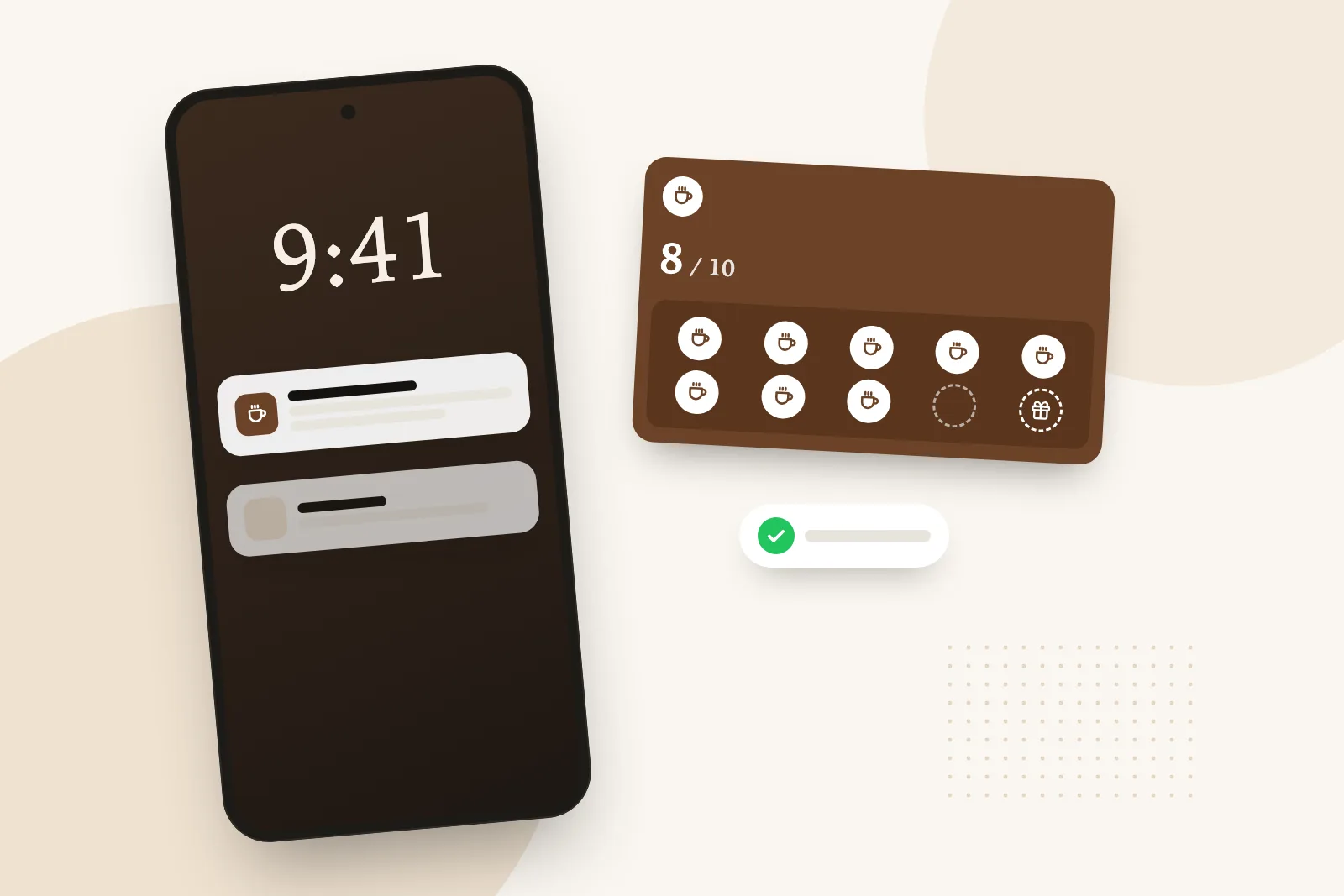
| "One stamp to go" reminder | None | Automatic, on the lock screen |
| Customer drifting away | You never know | Flagged when they skip their rhythm, with a message if you want |
| Data to decide with | None | Visits, rewards, busiest days |
A forgotten card is a lost stamp and a customer who feels they’re starting over. A card in the phone is always there, and can remind the customer they’re close. That’s exactly when, according to the café study, they speed up.
How to actually raise the basket
If ticket size is your goal, the program has to reward it explicitly. Three settings help:
- Points instead of stamps when baskets vary. A $3 visit and a $30 purchase no longer count the same, which gives customers a reason to add an item. StampyWallet’s points mode lets you choose the value when you scan.
- Tiers, with a more generous second reward: a coffee at 5 visits, a lunch at 15. Someone who just earned the first doesn’t start from zero.
- A reward that introduces something new, rather than a discount: a product they don’t buy yet. If they like it, it joins their basket. Our list of rewards that work has examples.
And skip percentage discounts: they lower the ticket instead of raising it, and teach customers to wait for the deal.
What to measure in your own shop
Instead of a number found online, track three indicators for two or three months:
- visits per active customer, per month;
- average time between visits, which should shorten as customers near the reward;
- rewards earned: if almost nobody gets there, the card is too long; if everyone does without coming more often, it’s a discount in disguise.
StampyWallet’s dashboard shows these figures, along with your busiest days and the customers drifting away, and everything exports to CSV.
Frequently asked questions
Does a loyalty card increase the average basket?
Somewhat, especially when it’s set up to: points, tiers, a reward above the usual ticket. Its main effect is on frequency: customers come back more often, particularly as they approach the reward.
Where did the "15% bigger basket" figure come from?
We published it without a source, and we’ve removed it. No credible study supports a single percentage for every kind of shop. The most-cited public data, such as Square’s, compares members with non-members and mixes the program’s effect with that of regulars.
How many extra visits can I expect?
In the reference café study, members bought about two more coffees a month. Your result will depend on your business, the reward and the card length, so measure it over two or three months.
Is a digital card better than paper?
The principle is the same. The difference is what happens between visits: the card isn’t forgotten, customers see their progress, and they get a reminder when they’re one stamp away or haven’t been in for a month.