
The 11th bag free, on its own row
The Kibble row counts bags: after ten, the next one is free, same size. The main row counts other visits and gives a toy on the eighth.
Pet stores
Updated
The lab's 30 lb bag, the cat's litter, the parakeet's seed and the aquarium test strips: purchases that come back like clockwork, and that slip to online autoship just as easily. A card on the owner's phone counts bags separately and pings them as the bowl runs low.
Create my pet store's card See pricing
Thirty days free, no contract, your phone is the scanner.
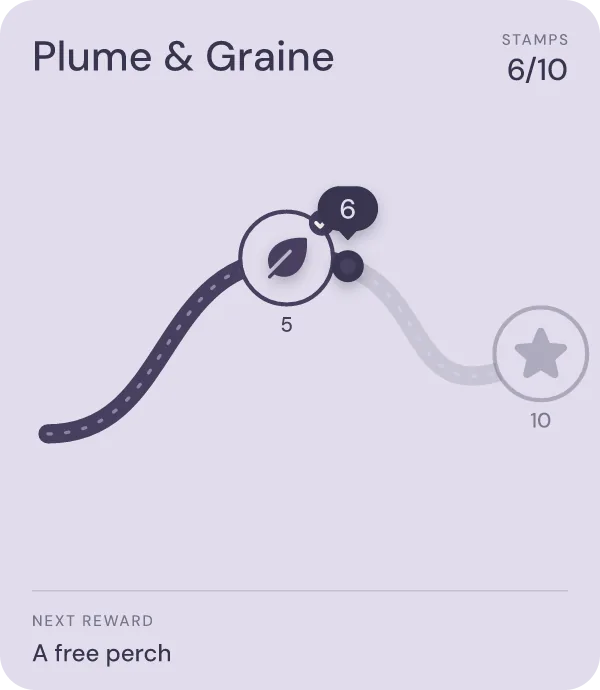
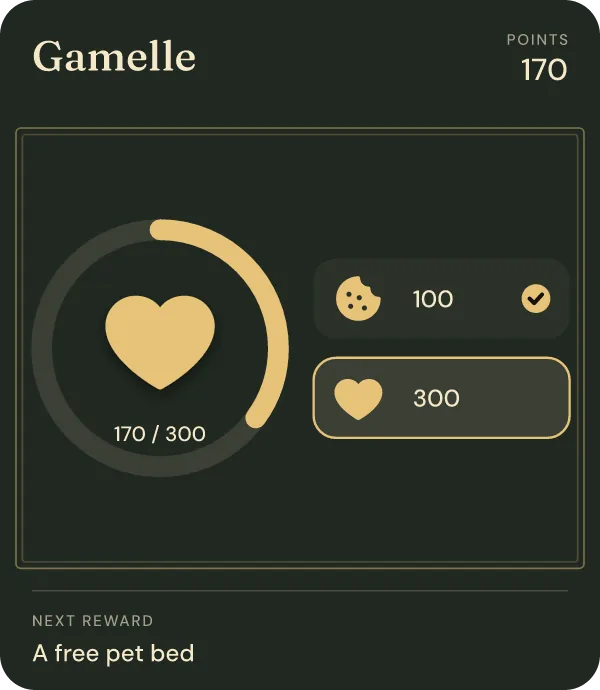
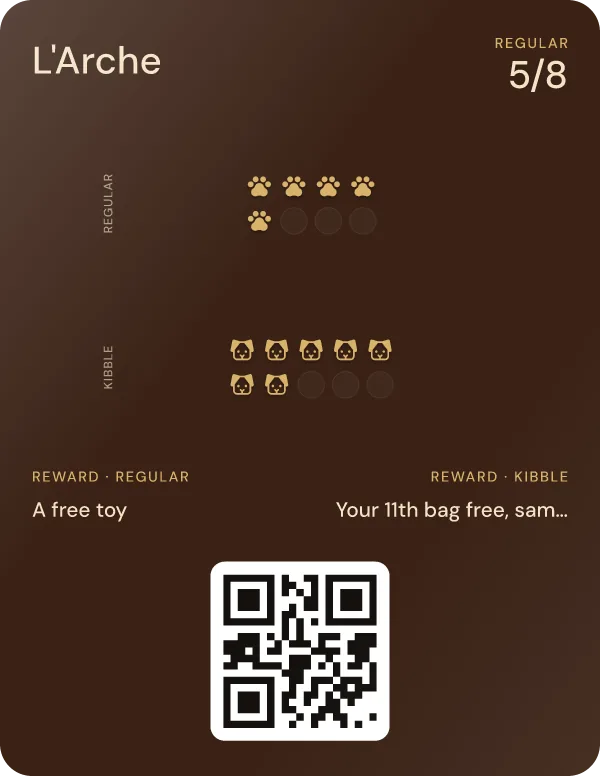
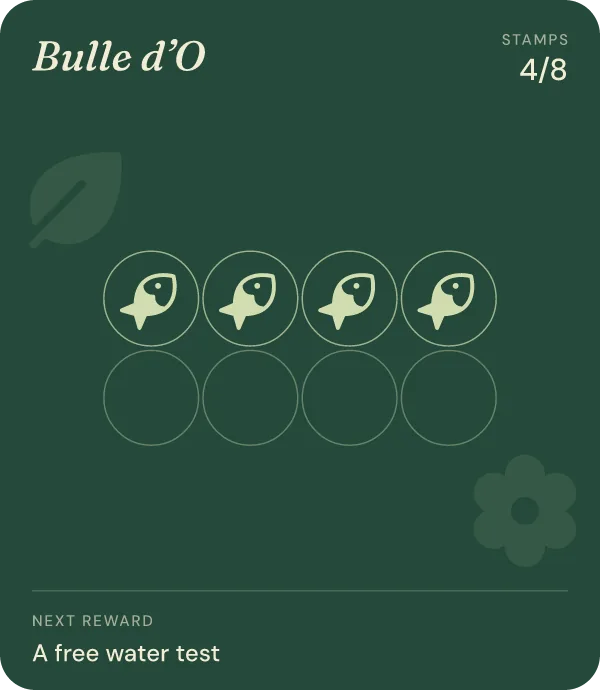
One that knows when the food bag runs out. Pet store regulars come back for their dog's or cat's food, on a schedule set by the bowl; toys and supplies ride along. StampyWallet keeps bags on their own row (the 11th free, same size), counts everything else per visit or per dollar, and nudges a customer when their usual refill is late. It lives in Apple Wallet or Google Wallet. On October 22, 2026, Essential is $29 a month before tax in the US and Growth, which adds the nudge, is $49 (€20 and €40 excl. VAT in Europe), after 30 free days.
StampyWallet is a loyalty card for Apple Wallet and Google Wallet, built for independent shops, pet stores included. Owners pick it up from the QR sign at your counter; at each purchase, you choose the row (visit or kibble) and scan their phone. The card belongs to the person, however many animals they have.
Bag elevenTen bags bought, the next one free in the same size: a reward nobody has to do math for.
Every brandYour row counts every bag you sell, where a brand's card counts only its own.
The empty bag, foreseenEach customer has a refill pace; when they run well past it, their card checks in.
The reward
A product rather than a discount, and never an animal. These three setups come straight off your shelves: food, supplies, and the fish room.
The Kibble row counts bags: after ten, the next one is free, same size. The main row counts other visits and gives a toy on the eighth.
Between a pouch of treats and a cat tree, tickets vary too much for one stamp. Treats at 100 points, a pet bed at 300.
For the aquarium aisle, a plain stamp card: customers come in for test strips and food, and the eighth visit earns a free water test.
Write "same size" on the free bag, the way brand programs do; otherwise the tenth 4 lb bag turns into a free 30 lb one.
Kibble bags
A bag of kibble and a rubber ball aren't worth the same and don't come back at the same pace. The card gives them two rows; you pick the right one on the scanner before you aim.
The Kibble rowNadia grabs her usual bag: you tap "Kibble", aim, and the row goes from 7 to 8 of 10. Everything else she buys stays on the main row.
The brand's card and yours
Terms as listed by US independent pet retailers for brand programs.
Alongside the brand's cardKeep running a vendor's punch card for its own terms; yours builds loyalty to the store, not to a label.
What bag eleven costsOne free bag for ten bought is one eleventh of the goods, about 9%. For less, go to twelve bags or limit it to the small size.
What counts as a bagTreats and litter go on the main row; only complete-food bags move the Kibble row. Put it on the counter sign, next to "same size".
At the counter
Arms full of dog food or holding a fish in a bag of water, the customer only has to hold out a phone; the scan takes two seconds.
1They hold out the phoneThe Bulle d'O card is already on screen, pulled up from the wallet.
2The scanner says what's nextFour stamps, five in a moment: one tap to confirm.

3The new count shows upThe notification lands while they settle the fish bag into their tote.
Kibble or visit, picked firstTwo scans in a row on two rows aren't treated as a double read: a bag and a toy on one receipt, two separate stamps.
The dog's name doesn't matterThe card is in the owner's name. If their phone is at home, "Find a customer" looks them up by first name, last name or number.
Walking past the storeYour store's location comes from its address; when the customer is on your block, their phone may bring up the card, depending on their own settings.
The bag running low
A cat that finishes a bag a month, a German shepherd that empties one every three weeks: every customer has a pace. The card learns it from their visits and sends one note when they go one and a half times past it, before they order somewhere else.
Each customer's own paceFrom four visits on, the card uses the median gap: a month away on vacation doesn't turn a regular into a lost customer. On the Growth plan.
With no history, nudge after
A delay for newcomersUntil a customer has enough history, your setting applies, from two weeks to three months; it also bounds the pace of regulars.
You write the words"Getting to the bottom of the bag?" or "Biscuit's favorite treats are back": the win-back text is yours to change in settings.
Once per absenceThe note goes out once, not every week. When they come back, their pace restarts from the new purchases.
Pricing
Nothing to install and no signup fee. Unlimited customers, cards and visits, your staff included, Apple Wallet and Google Wallet on every plan.
For an independent shop ready to move from paper to Wallet.
€20 excl. VAT / month
Billed monthly. No commitment.
Try EssentialIncluded in this plan
Most chosen
For an established business ready to automate customer returns.
€40 excl. VAT / month
Billed monthly. No commitment.
Try GrowthIncluded in this plan
For a brand managing several locations from a single account.
From €90 excl. VAT / month
Priced to the number of locations.
Talk about my networkIncluded in this plan
30 days free with every Growth feature, no commitment.
Using a register? Tell us about it
And if you stop: your customers' cards keep working and you can keep stamping. Nothing is lost, nothing goes dark on their side.
| Feature | Essential | Growth | Network |
|---|---|---|---|
| Locations | 1 | 1 | Several |
| Unlimited customers, cards and visits | ✓ | ✓ | ✓ |
| Notifications to all customers | ✓ | ✓ | ✓ |
| Customer groups and targeted messages | × | ✓ | ✓ |
| Automatic messages | × | ✓ | ✓ |
| 200 texts a month | × | ✓ | ✓ |
| Gift cards | × | ✓ | ✓ |
| Report with a control group | × | ✓ | ✓ |
| API, POS connections and webhooks | × | ✓ | ✓ |
| Unlimited team | ✓ | ✓ | ✓ |
| Priority support | × | × | ✓ |
Questions
No, and many places restrict pet sales anyway: since 2019, California pet stores may offer only dogs, cats and rabbits from shelters or rescue groups, and other states and cities have their own rules. Reward with food, supplies or a service like a water test.
One bag for ten works out to about 9% of the bag value. If that's too much for your margin, move to bag thirteen (12 bought) or limit it to the small size: it's a setting on the row.
One, in their name. Bags for all their animals go on the Kibble row, everything else on the main row; in points mode, you just type the receipt total.
No. A brand's card covers only that brand and its terms; yours counts every bag sold in your store and rewards the store. Customers can carry both.
It won't lower your price. It gives them a reason to buy the bag from you (the Kibble row) and lets you reach them at the right moment, when the bag should be empty.
No. They scan the QR on your sign and add the card to their phone's wallet; without a wallet, it opens in the browser.
As of October 22, 2026, Essential is $29 a month before tax in the US (cards, scanning, messages to everyone) and Growth is $49, adding the pace-based win-back and scheduled messages; €20 and €40 excl. VAT in Europe. Thirty days free, no contract; if you stop, customers keep their card.
Your logo, the Kibble row, the eleventh-bag reward, the sign at the counter.
Create my pet store's card All features
More reward ideas: the ones that bring people back.
Open this site in your browser
The demo card and Google sign-in don’t work inside this app.
Open in browser
