 Tips
Tips
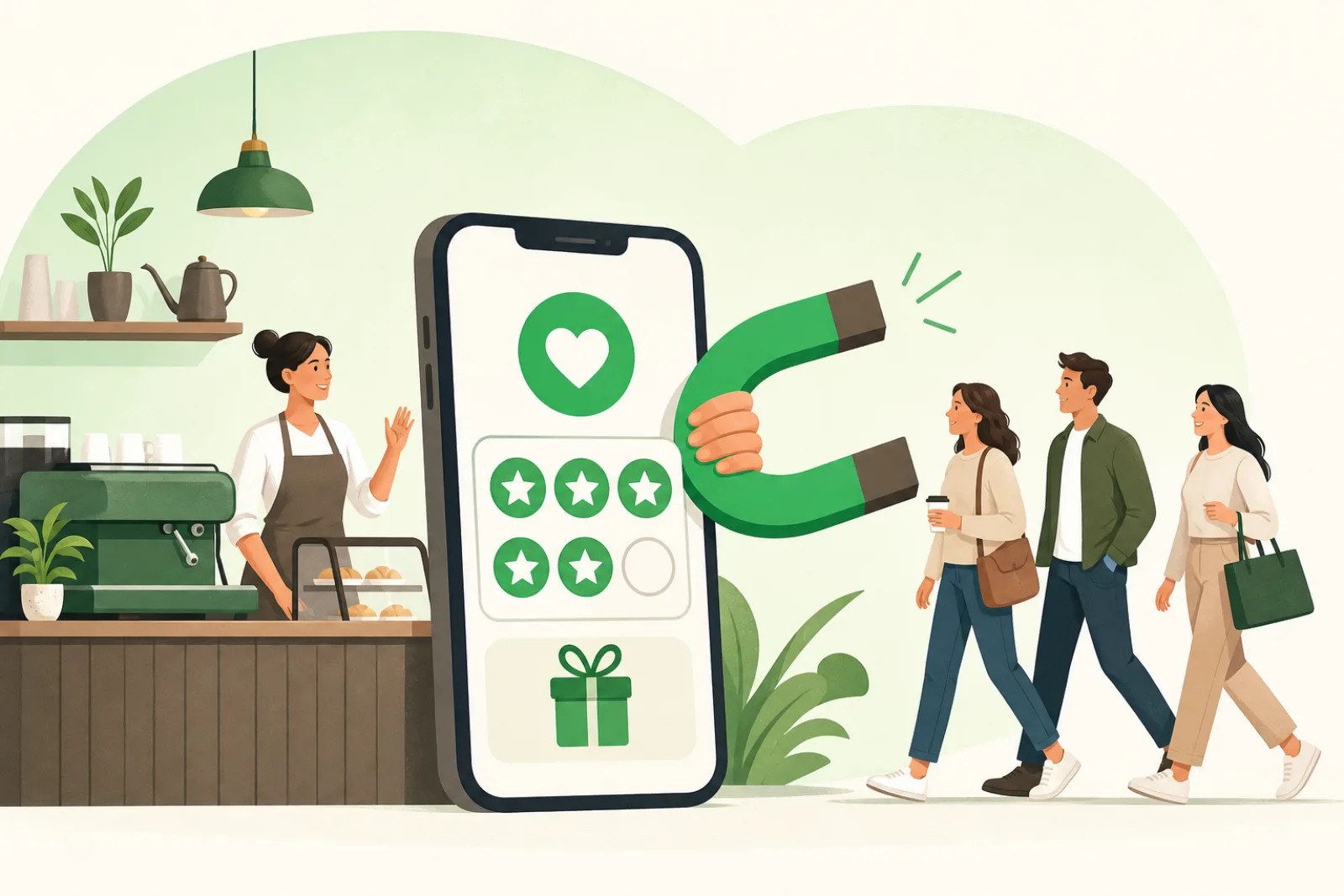
How to keep customers coming back to your shop or cafe
Practical, low-effort strategies to build genuine customer loyalty — without a big marketing budget or complicated software.
Put a real Apple Wallet loyalty card in your customers' phones — no developer, no hardware, and nothing for them to install. Here are the five steps, in order.
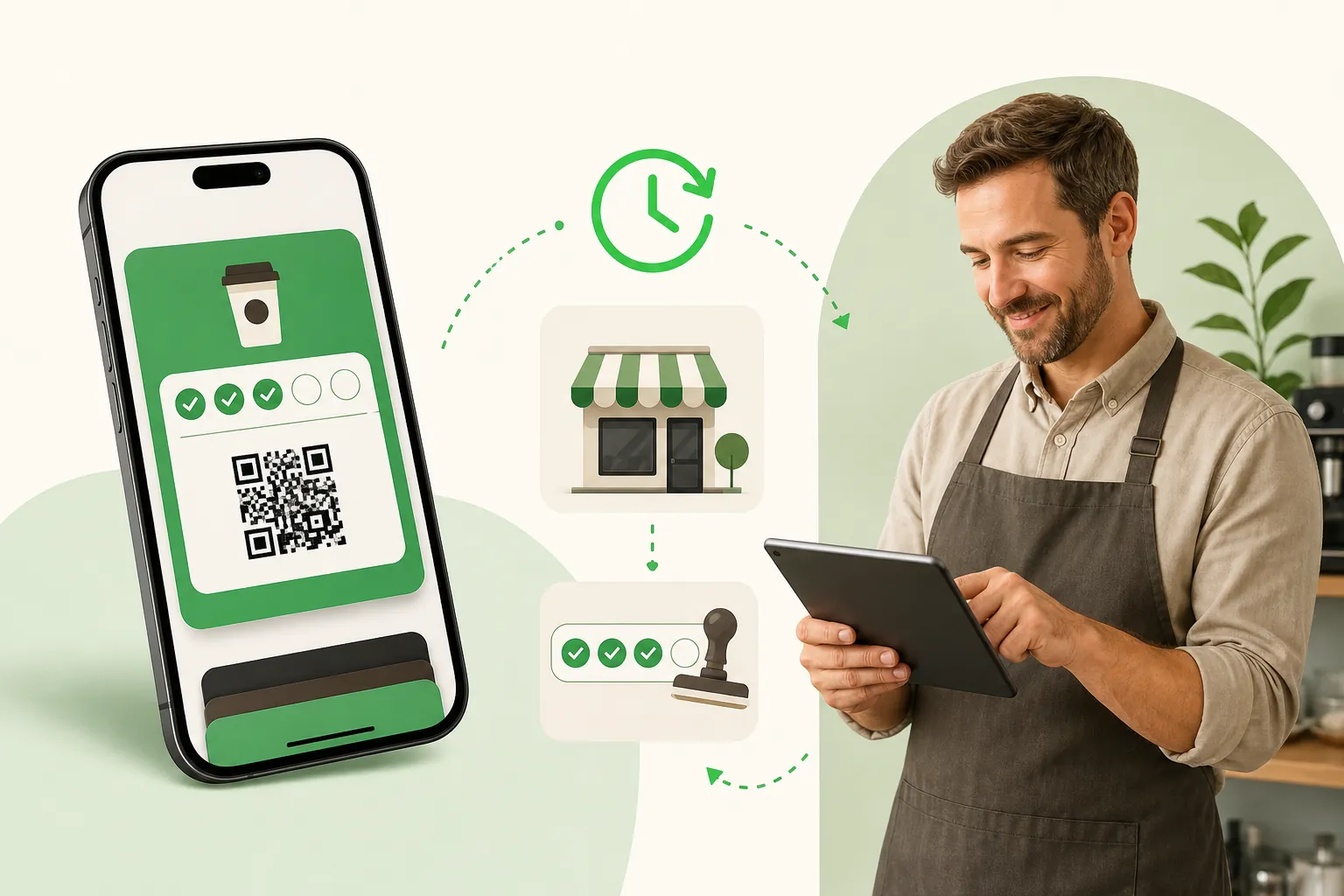
If you run a café, a bakery, a salon or a neighbourhood shop, you already know the paper card problem. Customers lose them, leave them at home, or hand you one they found on a counter. And when someone stops coming in, you have no way to reach them.
An Apple Wallet loyalty card fixes the essentials. It lives on the customer’s iPhone, shows on their lock screen, and can’t be misplaced. On your side, setting one up takes less time than designing and printing a new batch of cardstock.
Here’s how it works, and how to do it.
Apple Wallet is the native app on every iPhone — the one holding boarding passes, train tickets and payment cards. It’s been there since iOS 6, so your customers already have it and already know how to use it.
A loyalty card takes the form of a pass, filed alongside the rest. When a stamp is added or a reward comes close, the card can write a notification straight to the lock screen, with no third-party app involved.
That’s what makes signing up almost free for the customer. You’re not asking them to install anything, create an account or remember a password. You’re asking them to point their camera at a QR code.
No developer, no new till, no hardware. The list is three lines long:
The service handles the rest: building the pass, signing it in Apple’s format, and giving you a web page to stamp cards at each visit.
Not every loyalty tool builds an Apple Wallet pass. Some only show a web page dressed up as a card: it opens in the browser, but it doesn’t install into Wallet and therefore can’t write on the lock screen.
The distinction matters, because the notification is precisely what brings people back. Look for a tool that states it issues native passes for Apple Wallet — and for Google Wallet, because a good share of your customers are on Android.
StampyWallet is built for independent shops: both wallets are included in the subscription, with no options and no surcharge.
Once the account is open, you set three things:
Keep it simple and concrete. "The tenth coffee free" reads better than "10% off your next order", and gives a goal the customer can see coming.
The tool gives you a printable sign in your shop’s name, in A5 or A6. You put it where customers settle up, or you show the code on a screen.
When someone wants to join, they point their iPhone camera at it. A prompt to add the pass to Apple Wallet appears. One tap and it’s done: no download, no form, no email address to type.
At the till, you open your scan page in your phone’s browser, scan the customer’s card and confirm. No tablet, no scanner gun, no dedicated terminal.
The screen shows you who you have in front of you and where they stand — "Camille, 6 → 7 of 10" — before you confirm, with a button to back out if it’s the wrong person. A guard rejects a second scan straight after the first, so a card doesn’t get stamped twice for one coffee. And if the connection drops, the stamps go through as soon as it’s back.
This is where digital genuinely beats paper. The card writes on your customers' lock screens:
None of that exists with cardstock. And never at three in the morning: you set your quiet hours.
That isn’t an optimistic estimate: there’s no integration to request, no Apple developer account to open, no certificate to manage. All of that lives with the tool, not with you.
You don’t need a script. One sentence works:
We have a digital loyalty card now — scan this code with your camera and it goes straight into your Wallet.
Most people already know how to scan a QR code and know what Wallet is. You’re applying something familiar to something they already do at your shop.
And if a customer is on Android, the same code works: the card goes into Google Wallet, with exactly the same gesture.
With a paper card there is no data — so no questions to ask, and no way to know anything. With a digital card, the real question is who owns it.
The data is hosted in Strasbourg and the product is GDPR-compliant. CSV export is one click, at any time, without asking anyone: if you ever change tools, your customer list leaves with you. And a customer can delete their card and their data themselves, from the card.
If your customers are split between iPhone and Android, you need both. Technically they’re two different formats; from your side the experience is identical: one QR code, one scan, card added.
Both are included in the same subscription, with no surcharge and no box to tick. You don’t have to know which one your customer uses — the link takes care of it.
No. They scan a QR code with their iPhone camera and the pass is added straight to Apple Wallet, already on the device. No third-party app.
Yes. The same QR code sends iPhones to Apple Wallet and Android phones to Google Wallet, depending on the device. The gesture is the same on both sides.
The card is tied to their wallet account, not the device. They get it back — stamps included — by restoring their wallet on a new phone.
Yes, on their lock screen, without them having to open anything. To everyone, to those absent for thirty days, or to those one stamp away from a reward.
No. Stamping happens in a phone browser. If you’d rather your till did the counting, points mode allows it with SumUp, Zettle or the one you already have — connected by hand, on request, at no extra cost.
No. All the technical complexity — the Apple certificate, signing the pass, the updates — lives with the tool. A single-location café sets up a native card as easily as a chain does.
The dashboard counts them in opening days rather than calendar days: three weeks closed in August doesn’t turn your regulars into lapsed customers. You can then message them in one gesture.
Tips
Practical, low-effort strategies to build genuine customer loyalty — without a big marketing budget or complicated software.
 Beauty
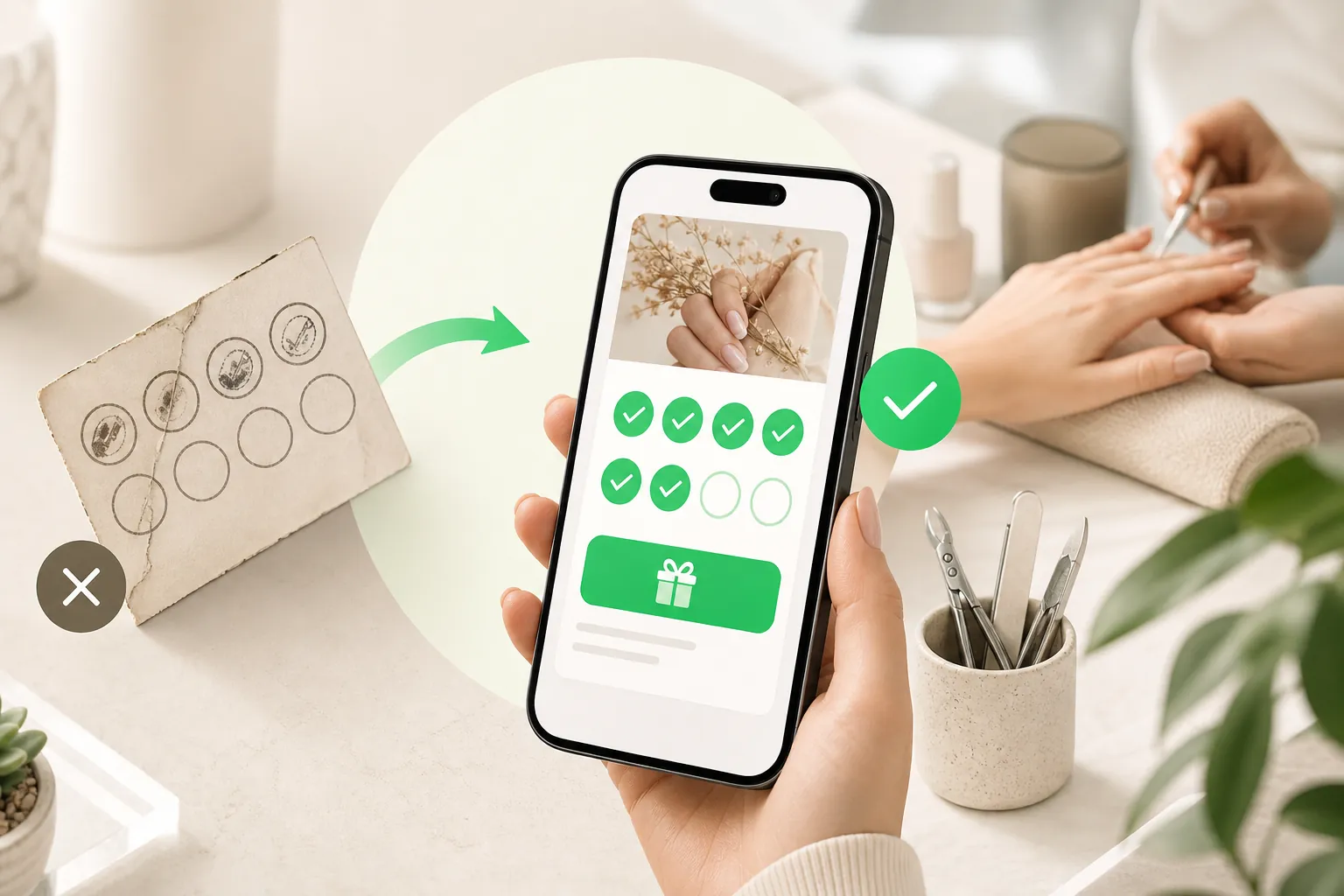
Your clients already come back every two or three weeks. A digital loyalty card turns that habit into something you can see and act on — no forgotten card, no hardware, no extra work at the desk.
 Guide
Guide
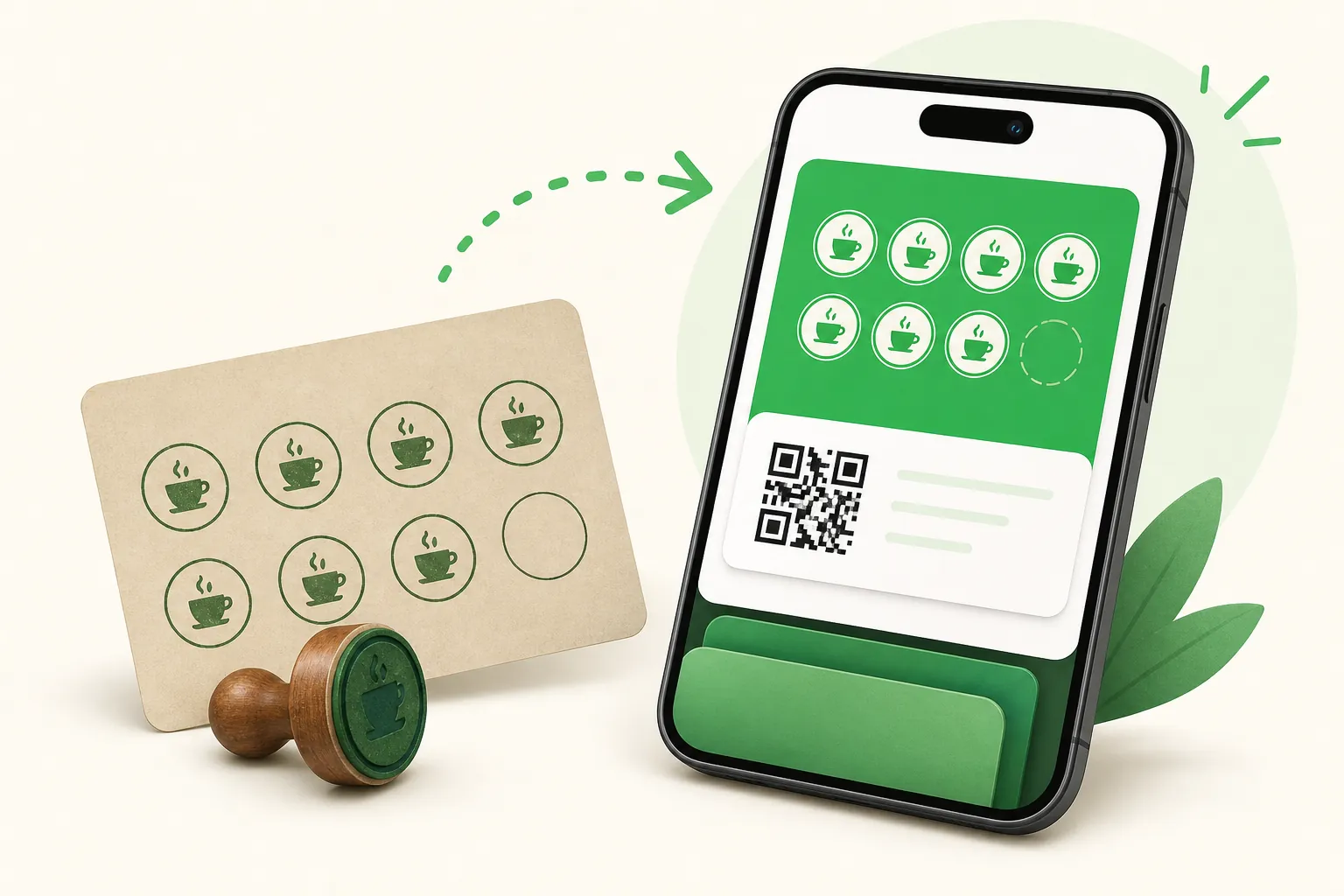
The mechanic hasn't aged: nine coffees, the tenth free. The cardstock has. The same counter, living in the phone, keeps what works and removes what gets in the way.