 Tips
Tips
How to keep customers coming back to your shop or cafe
Practical, low-effort strategies to build genuine customer loyalty — without a big marketing budget or complicated software.
How to replace the paper stamp card with a digital one in Google Wallet or Apple Wallet — no app to install, no special hardware, and no IT budget.
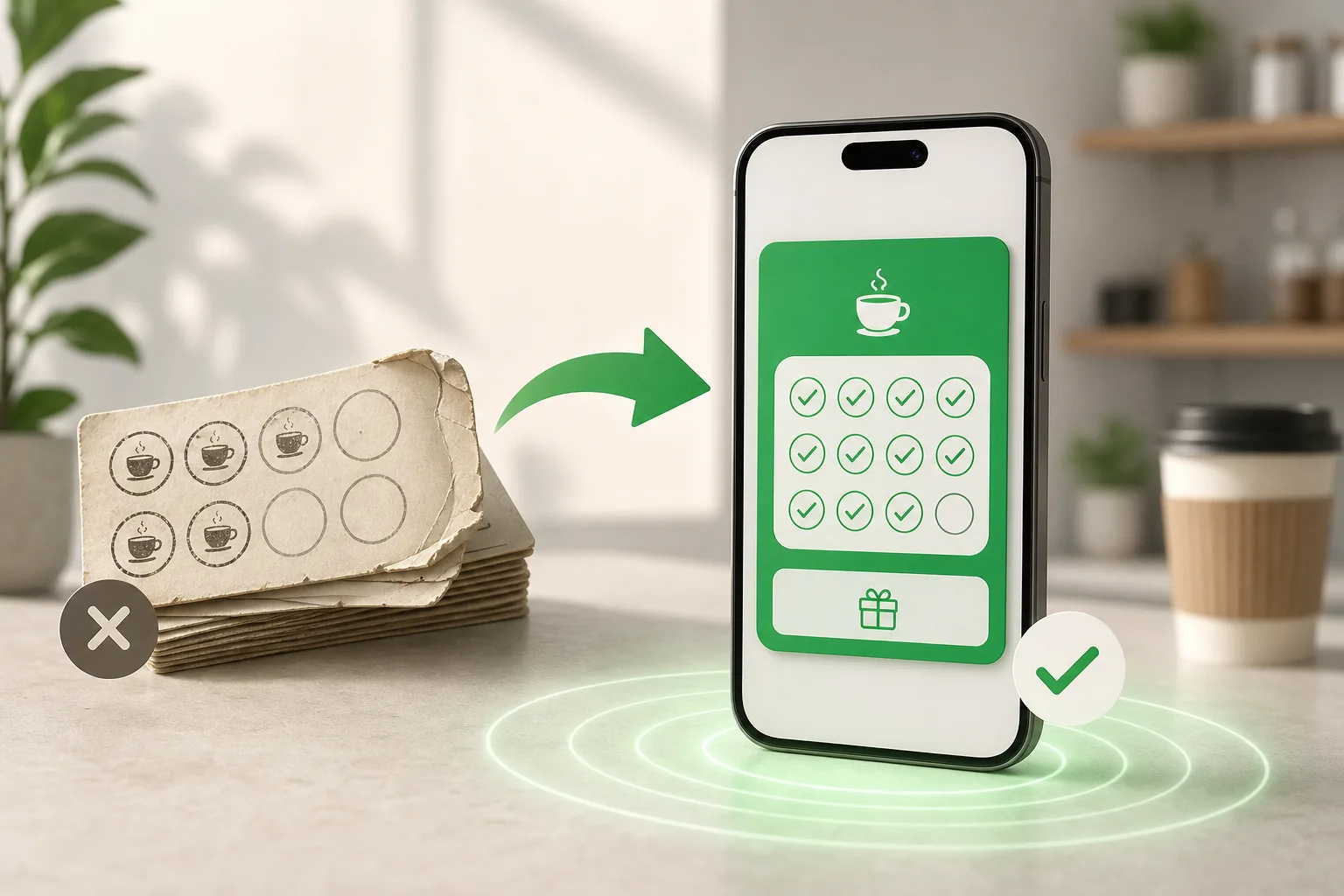
Your customers lose their stamp card. They don’t lose their phone.
That is the core problem thousands of independent shop owners in France run into every year. The paper card falls out of a wallet, ends up at the back of a drawer, or simply disappears before the tenth visit. The result: you hand out rewards your customers never collect, and you have no idea who actually comes back.
In 2026, the digital loyalty card changes that equation. This guide explains what it is, how it works in practice, and how a café, a restaurant or a neighbourhood shop can roll one out with no app to install, no special hardware, and no IT budget.
A digital loyalty card is the digital equivalent of your paper stamp card, with one major difference: it lives in your customer’s phone, in the wallet that came with it (Google Wallet or Apple Wallet), and it can’t get lost.
The principle stays the same: the customer collects stamps on each visit and unlocks a reward after a set number of visits. Everything else changes.
The paper stamp card was the default for a long time because it was simple and cheap. But it has three structural flaws that shop owners live with without necessarily naming them.
A loyal customer who loses their card on the seventh visit won’t necessarily come back and ask for a new one. They start from zero, frustrated, or simply give up. You lose a regular not because they were unhappy, but because a piece of cardboard went missing.
With a paper card, you don’t know how many active customers you really have. You can’t tell the customer who comes twice a week from the one who dropped in once six months ago. And you can’t get in touch with someone who hasn’t been back in a while to remind them they’re two stamps away from a reward.
It isn’t the most common problem, but it exists. A homemade stamp, a ballpoint pen, and the card is full. With a digital card, every stamp is recorded by the shop owner from their own browser: nobody can help themselves any more.
It comes down to three steps on the customer’s side and a single one on yours.
On the tenth stamp, the reward unlocks automatically. The customer sees the notification on their lock screen.
You stamp from any browser, on your own phone or on an employee’s. No dedicated tablet, no software to install, no connection to your till required. You scan, you confirm, done.
The main brake on customer loyalty is friction. The more effort you ask of a customer (download an app, create an account, produce a card they may well have left at home), the more people you lose along the way. A card that lives in the phone removes that brake: the customer always has it on them.
This is one of the most underrated advantages of the digital format. You can send a message straight to the lock screen of all your customers, or only the ones you pick: those who haven’t been in for 30 days, those one stamp away from their reward, or all your regulars ahead of a special event.
That kind of targeted message is impossible with a paper card.
A dashboard shows you how many active customers you have, how often they visit, and who is drifting away. You can act before you lose a regular for good, instead of noticing their absence weeks later.
The serious providers host their data in France and comply with GDPR. Your customer data stays yours, and you can export it in one click if you need to.
There are several ways to take customer loyalty digital. Here is how they compare for an independent shop owner.
Some providers offer their own app that your customers have to download. The problem: take-up is low. Asking a customer to download a new app for one single shop is a real obstacle, especially for a neighbourhood café or restaurant.
Square Loyalty and the loyalty modules built into certain tills work well if you already use that system. But if you don’t have a connected till, or if you don’t want to change your equipment, they aren’t a fit. Above all, they assume loyalty runs through the till, and therefore through whoever is operating it — a choice that commits you to far more than a loyalty card.
This is the simplest approach for the customer. They install nothing new: Google Wallet and Apple Wallet are already on their phone. The card is added in a few seconds from a QR code. It is the format StampyWallet uses, and it is exactly what removes the friction on the customer’s side.
Moving to a digital loyalty card takes no technical training and no equipment spend. Here’s how to go about it.
On a platform like StampyWallet, you set your card up in a few minutes: your business name, how many stamps are required, the reward on offer, the colours. No code, no developer.
Once the card is created, you get a QR code to display on your counter, on a table, or on a sign by the door. It is the only physical part of the whole thing.
When a customer comes in for the first time, show them the QR code. Ten seconds later, the card is in their wallet. No form, no account to create.
On each visit, you open your browser, scan the customer’s card, and confirm the stamp. The update reaches their phone instantly.
When a quiet stretch comes, or when you want to remind customers they’re close to a reward, send a targeted notification. It’s free, it’s immediate, and it lands straight on their screen.
Not every digital loyalty card is worth the same. Here’s what to look at.
Google Wallet and Apple Wallet support. This is the single most important criterion for customer take-up. A card that requires a third-party app will see far fewer people sign up.
How easy stamping is for the shop owner. If you stamp from a complicated interface or a dedicated tablet, you’ll lose time at the till. Favour something that runs from any browser.
Push notifications included. That’s what separates a passive digital card from a real tool for keeping customers coming back.
Data and GDPR compliance. Check where your data is hosted and whether you can export it easily.
Clear pricing. Be wary of anything with hidden per-customer or per-stamp fees. A flat subscription is easier for a small business to plan around.
Prices vary, but an independent business doesn’t need a complicated setup. StampyWallet has a founder price of €19/month excl. VAT per venue (or €190/year excl. VAT, i.e. two months free), with a free 30-day trial and no commitment. No limit on customers, stamps or staff accounts.
For comparison: the yearly cost of printing paper stamp cards, plus the customers you lose because they mislaid their card, usually comes to a good deal more than that.
The digital loyalty card isn’t a trend reserved for big chains. In 2026 it’s within reach of any café, restaurant or neighbourhood shop, with no app to install, no special hardware, and no technical skills.
What you get in return: customers who keep their card, data on your regulars, and the ability to reach them when you need to. What you give up: forgotten cards, faked stamps, and quiet stretches you can do nothing about.
If you want to try it, StampyWallet gives you 30 days of full access with no commitment.
It’s a digital version of the paper stamp card that lives in the wallet built into the customer’s phone (Google Wallet or Apple Wallet). The customer adds it by scanning a QR code, with no app to download. The shop owner stamps it from their browser on each visit.
No. Google Wallet and Apple Wallet are already on nearly every smartphone. The customer installs nothing new: they scan the QR code and add the card in two taps.
From any web browser, on your phone or an employee’s. No dedicated tablet, no connection to your till. You scan the customer’s card and confirm the stamp in a few seconds.
Yes. Platforms like StampyWallet let you send notifications straight to your customers' lock screens, to everyone or only to some (for example, customers who haven’t been in for 30 days, or those one stamp away from their reward).
That depends on the provider you pick. Check that the data is hosted in France or in the European Union, and that you can export it at any time. StampyWallet is hosted in France and GDPR-compliant.
Prices vary from one provider to the next. StampyWallet has a subscription at €19/month excl. VAT per venue with a free 30-day trial, no commitment. There’s no limit on customers or stamps.
Yes. You can roll the digital card out gradually, offering it to new customers while your regulars finish the paper cards they already have. The switch happens naturally over a few weeks.
Tips
Practical, low-effort strategies to build genuine customer loyalty — without a big marketing budget or complicated software.
 Beauty
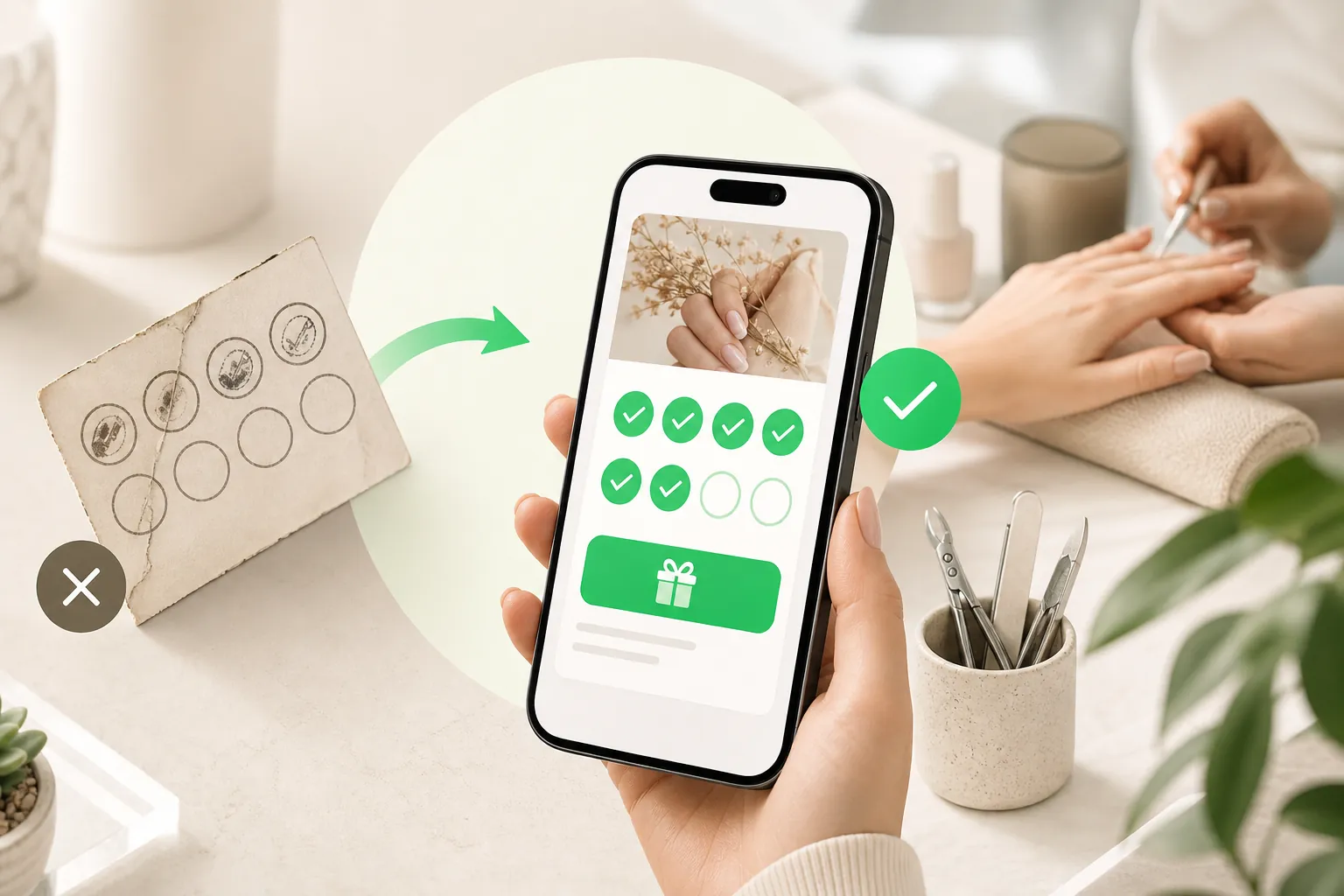
Your clients already come back every two or three weeks. A digital loyalty card turns that habit into something you can see and act on — no forgotten card, no hardware, no extra work at the desk.
 Guide
Guide
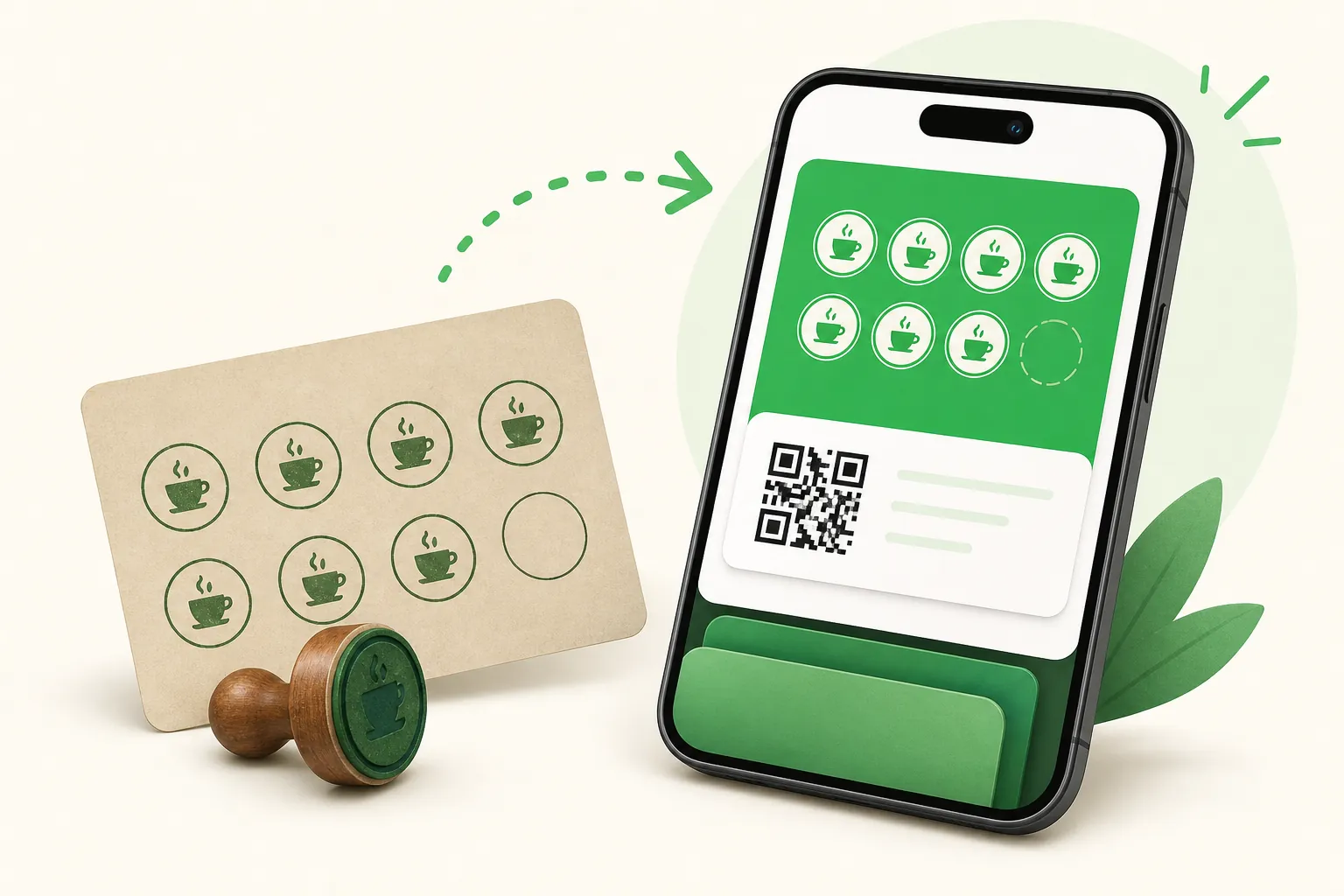
The mechanic hasn't aged: nine coffees, the tenth free. The cardstock has. The same counter, living in the phone, keeps what works and removes what gets in the way.