 Bakeries
Bakery loyalty program: rewards, stamp counts and the real cost
Which reward to give, how many stamps to ask for and what it really costs: a bakery loyalty card that survives the morning rush, on paper or in the phone.
How many stamps, which reward, and what a free coffee really costs you. A practical guide for independent coffee shops, with worked numbers and real research.
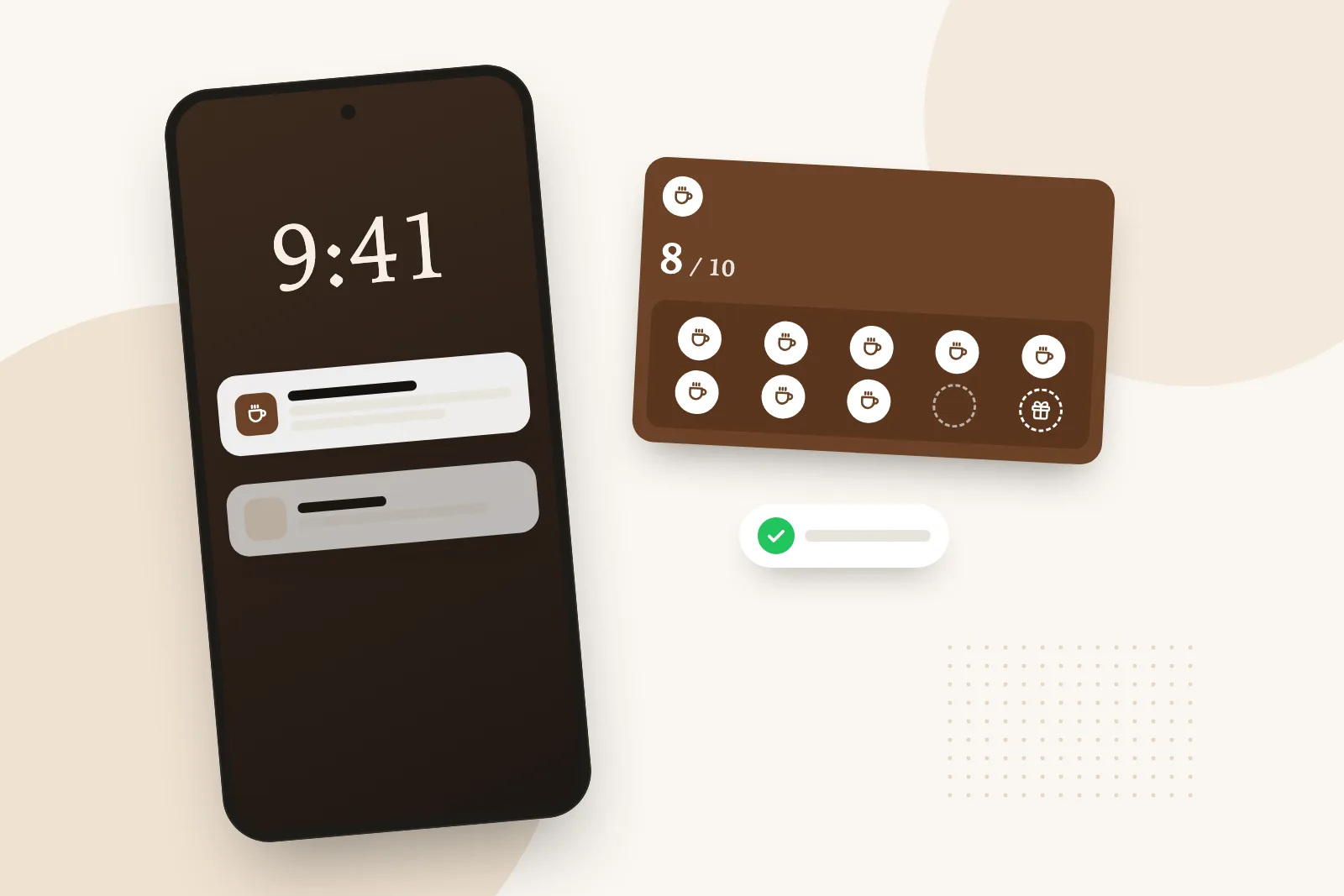
The best coffee shop loyalty program for an independent café is still the punch card: buy nine drinks, get the tenth free. It works because it’s simple, it rewards the habit you want (coming back), and it costs you far less than it looks. What’s changed is the card itself: it now belongs in your customers' phone, where it can’t be forgotten and can remind them to come back.
Coffee is a habit business. According to the National Coffee Association, 66% of American adults drink coffee every day (spring 2026), and in its fall 2026 survey 38% of past-day drinkers had coffee prepared away from home, the highest level since January 2020. The same survey found a record 40% ordering through an app, which is the chains' loyalty machine at work. Your loyalty program competes with theirs for the same morning.
The punch card has unusually good evidence behind it. Researchers at Columbia followed a real café's "buy ten coffees, get one free" program, covering 949 completed cards and roughly 10,000 purchases (Kivetz, Urminsky and Zheng, Journal of Marketing Research, 2006). What they found:
That acceleration has a name, the goal-gradient effect, and it’s the reason a visible stamp count beats a vague "points balance" for coffee.
Most owners overestimate the cost of a loyalty program because they think in menu prices. Do it in costs.
Take a drip coffee at $3.65, the median price on Toast’s platform in early 2026. Say it costs you $0.75 to make, cup and lid included. The costs below are examples, not industry figures, so plug in your own.
| Card | Customer pays | Reward costs you | Cost as % of card revenue |
|---|---|---|---|
| Buy 9, 10th free | 9 x $3.65 = $32.85 | $0.75 | 2.3% |
| Buy 7, 8th free | 7 x $3.65 = $25.55 | $0.75 | 2.9% |
| Buy 9, free pastry worth $4.25 (cost $1.20) | $32.85 | $1.20 | 3.7% |
| Buy 9, "any drink" free, redeemed as an oat latte (cost $1.60) | $32.85 | $1.60 | 4.9% |
Two lessons jump out. First, a stamp card is cheap: for a few percent of revenue you get a reason to choose you tomorrow. Second, the wording of the reward matters more than the number of stamps. "Any drink" quietly doubles your cost, because people redeem the large specialty drink. "Your 10th 12 oz drink is on us" or "a free drip or espresso" keeps it predictable.
Divide what the program costs you each month by your margin on one drink. With a $2.90 margin on that drip coffee, a tool costing $29 a month is paid for by ten extra coffees a month, across your whole customer base. If the Columbia figure of two extra coffees per member per month held for even five of your regulars, you’d be there. Everything after that, plus the reward cost, is the real test.
Then track two numbers for a couple of months: how many cards are active, and how many rewards were redeemed. If almost nobody reaches the reward, the card is too long. If everyone does and visits haven’t changed, it’s a discount, not a loyalty program.
Ten stamps, one free drink, stated precisely on the card. One stamp per visit, not per drink, unless you want to reward group orders. The point is the habit.
The same Columbia study tested an "illusion of progress": customers given a 12-stamp card with 2 bonus stamps completed the ten required purchases in 12.7 days, versus 15.6 days for a plain 10-stamp card, nearly 20% faster. It costs you nothing. StampyWallet lets you give up to five stamps at sign-up, so people leave with 2 of 10 instead of 0 of 10.
A pastry at 5, a drink at 10. The first reward arrives within a week or two for a regular, which hooks people who’d otherwise drop off early, and the second keeps them going. Tiered cards are a setting, not a different program.
A commuter café with daily regulars can run 10 stamps. A weekend brunch spot where people come once a week should run 6 to 8, or the card takes two months and feels out of reach. Aim for three to five weeks to finish for a typical regular.
If you sell retail coffee, make a bag of your blend the reward at a higher tier, or count bean purchases in points mode. It moves margin-rich stock and sends your coffee home with them.
A birthday message with nothing attached is noise. A free drink on their birthday is a reason to come in and a story they’ll tell. With StampyWallet the birthday message only goes out if you’ve written a gift, and only the day and month are asked, never the year.
The most valuable message you’ll ever send goes to someone who used to come three times a week and hasn’t been in for a month. Maybe they changed jobs, maybe they found another café. Toast data shows how concentrated restaurant revenue is: up to 50% of order volume can come from just 7% of guests (Q1 2026). Losing a regular costs more than you think. A digital card can send one nudge automatically after 30 days without a visit.
Your 2pm slump is the time to message, not to discount. "New cold brew on tap this week" or "Fresh cardamom buns at 2" on the lock screen of people who already love your place beats a 20% coupon that trains people to wait for deals. Our guide to quiet periods has more.
Right after someone redeems their first reward is when they like you most. That’s the moment to ask for a review, once. StampyWallet can send that request by email or SMS after the first reward.
Programs fail at the counter, not in the settings. Every barista says the same thing at payment: "Want our loyalty card? Scan this and it goes straight into your phone’s Wallet." Give staff their own scanning accounts so the card gets stamped even when you’re not there.
| Paper punch card | Chain-style app | Wallet card | |
|---|---|---|---|
| Customer effort to join | None | Download, account, password | Scan, tap "Add" |
| Forgotten at home | Often | Rarely | Rarely |
| Fraud (extra punches) | Easy | Hard | Hard |
| Reminders between visits | None | Push, if they allow it | Lock-screen notification |
| Knows your regulars | No | Yes | Yes |
| Cost for an independent | Printing | Expensive to build | Monthly subscription |
Square’s data, from businesses that run its loyalty product, points the same way: food and drink customers enrolled in Square Loyalty spend 46% more and visit 57% more often (2022 data). That compares members with non-members, so part of the gap is simply that regulars sign up. But it shows where your best customers end up when you give them a card.
A Wallet card is the punch card without its weaknesses. Your customer adds it from a QR code at the counter in about ten seconds, with no app. You scan it from your own phone. It works on iPhone in Apple Wallet and on Android in Google Wallet, from the same code. Our Apple Wallet loyalty card guide covers the details.
For a daily or near-daily coffee, 8 to 10. For a café people visit once a week, 6 to 8. A good test: a typical regular should complete the card in three to five weeks. In the Columbia café study, completed 10-stamp cards took 24.6 days on average.
A free drink, defined precisely ("any 12 oz drink" or "a drip or espresso drink"). It’s tangible, cheap to give, and brings the customer back in for the redemption. A pastry or a bag of beans works well as a second tier.
The rewards themselves cost roughly 2 to 5% of the revenue from the visits needed to earn them, depending on the reward. On top of that comes the tool: StampyWallet starts at $29 a month before tax (£19 in the UK, €20 in Europe), with a 30-day free trial and no hardware.
For an independent shop, a digital punch card in Apple Wallet and Google Wallet. Customers won’t download an app for one café, but they’ll scan a QR code and tap "Add".
They don’t have to. Expiring stamps frustrate people more than they protect you. If you change the program, honor the stamps already earned.
Yes. With a digital card, only you can add a stamp by scanning the customer’s card, you see their name before confirming, and a second scan right after the first is rejected.
Bakeries
Which reward to give, how many stamps to ask for and what it really costs: a bakery loyalty card that survives the morning rush, on paper or in the phone.
 Guide
Guide
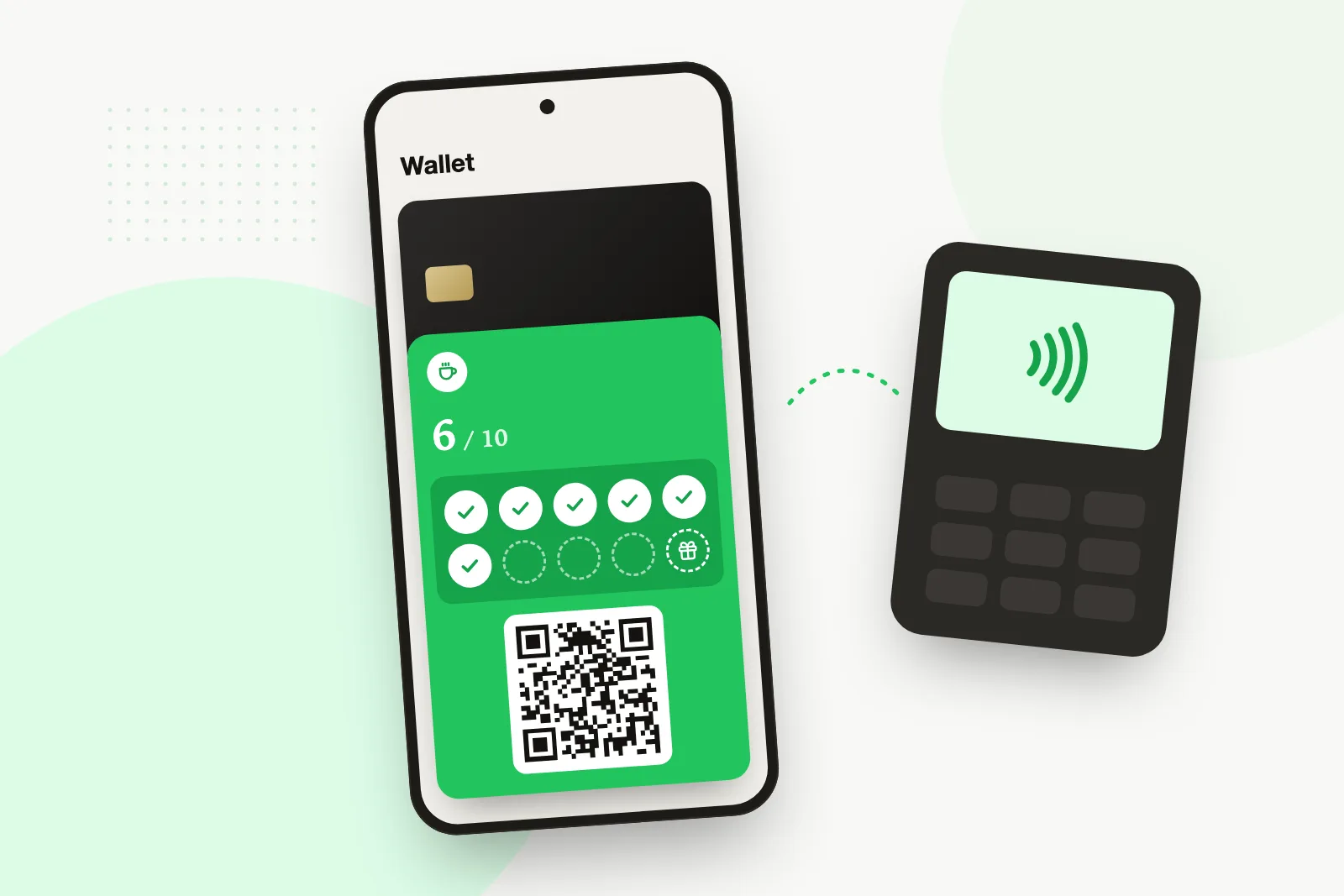
Apple Pay has no loyalty program for your shop, and one-tap loyalty needs certified NFC hardware. What really exists in 2026, and what works at a small counter.
 Beauty
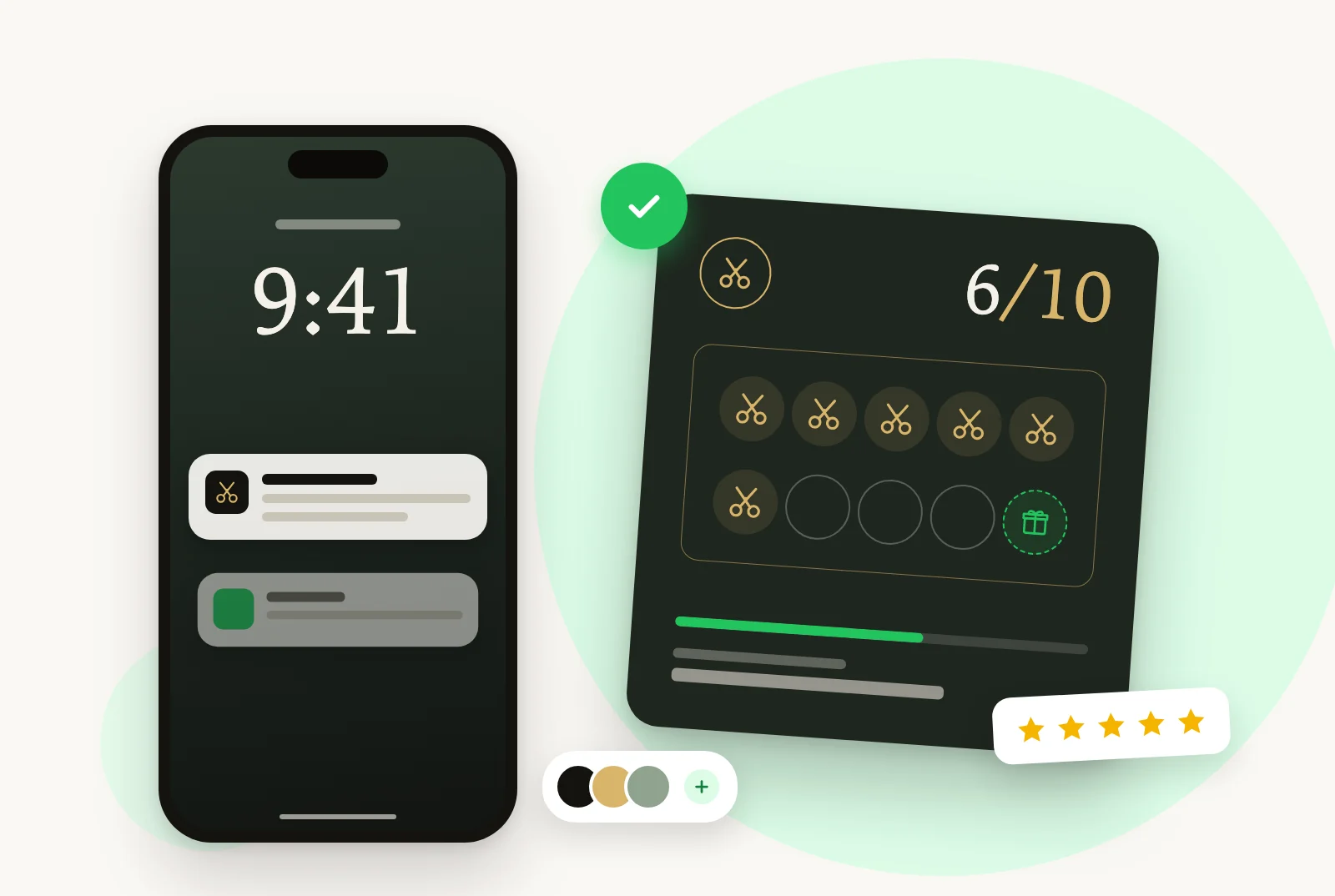
Your clients come back every few weeks, but nothing guarantees they come back to you. A loyalty card on their phone keeps count of their cuts, nudges the ones running late and lets every stylist stamp from their own phone.