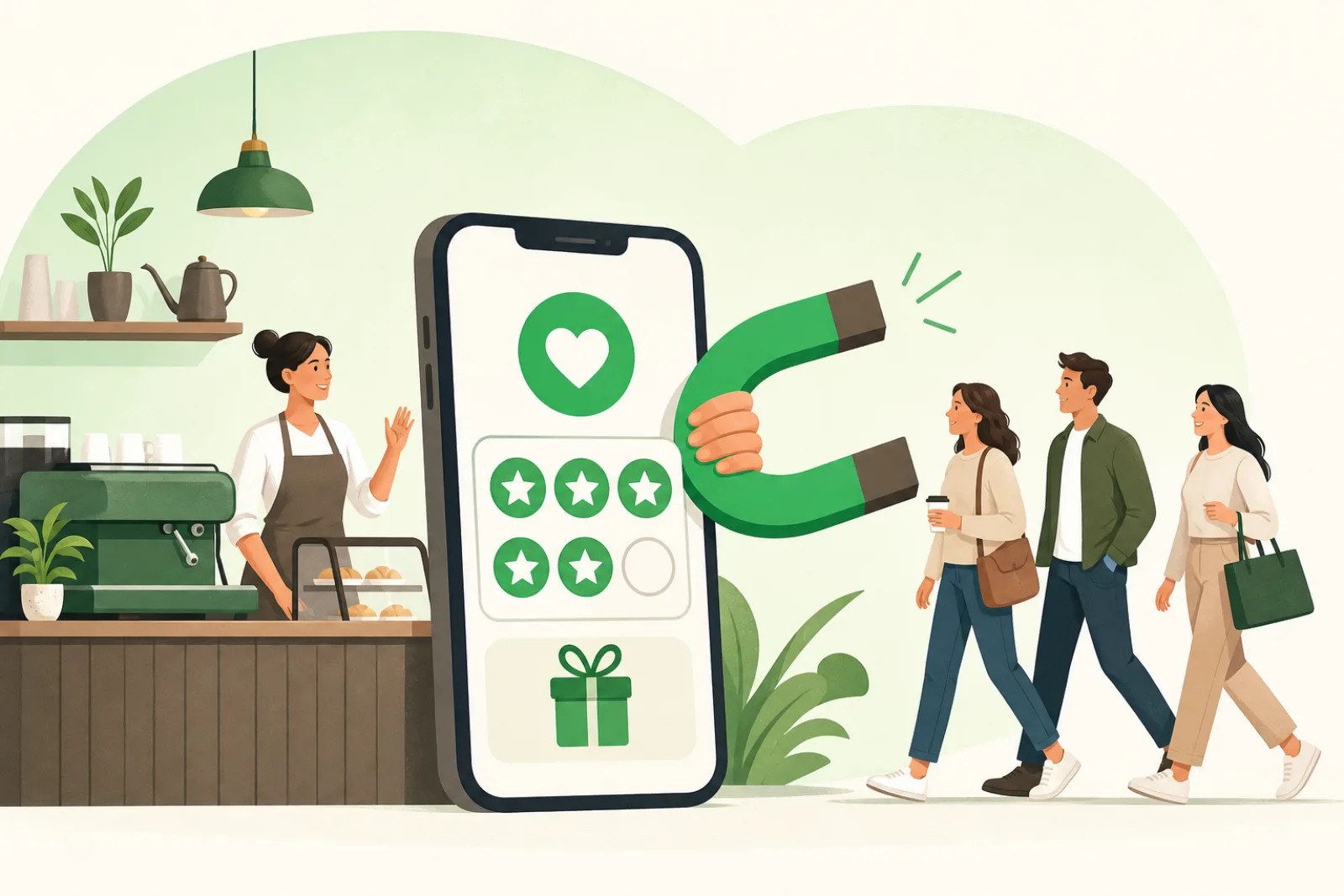
 Tips
Tips
How to keep customers coming back to your shop or cafe
Practical, low-effort strategies to build genuine customer loyalty — without a big marketing budget or complicated software.
Your clients already come back every two or three weeks. A digital loyalty card turns that habit into something you can see and act on — no forgotten card, no hardware, no extra work at the desk.
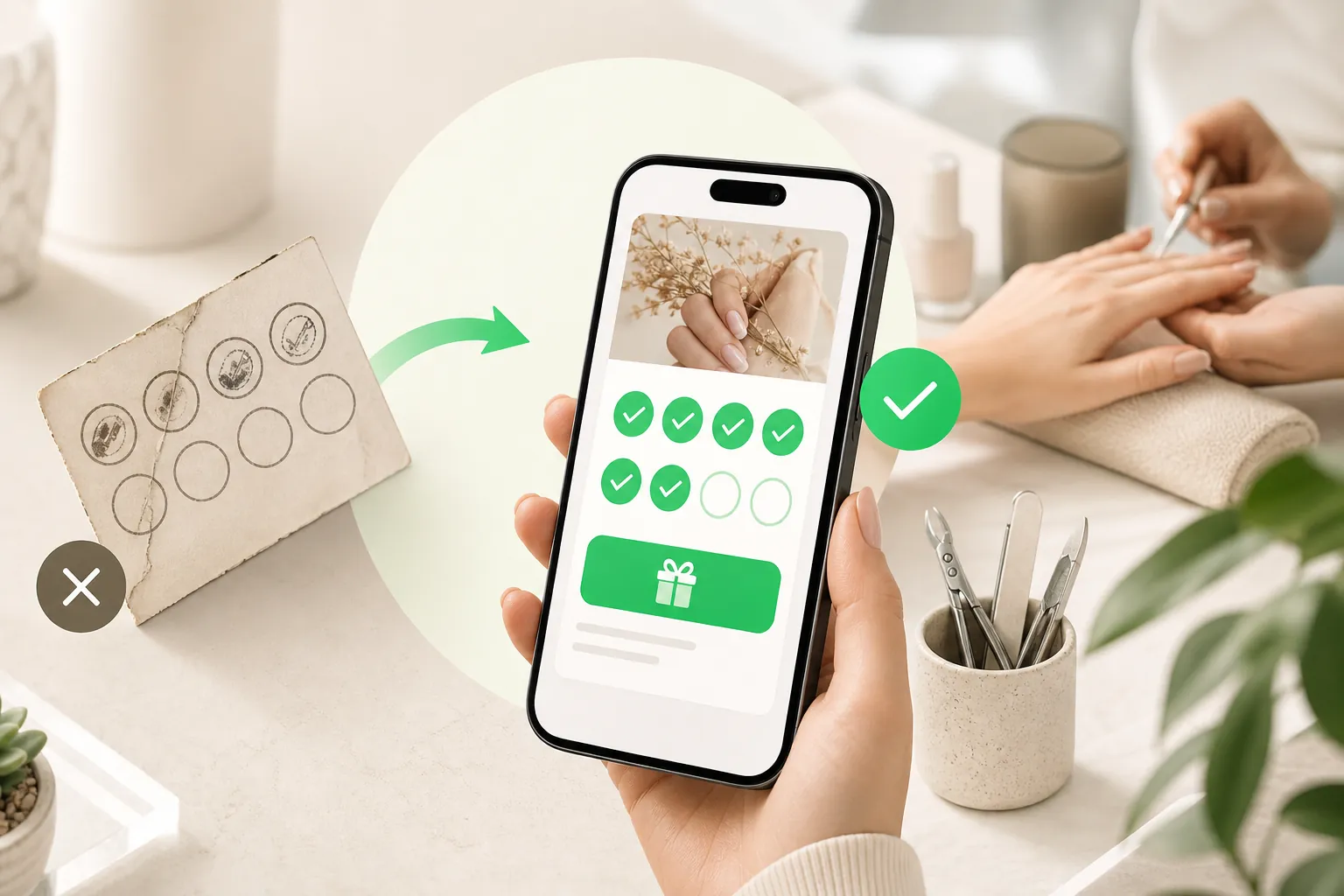
Your clients come back every two or three weeks. They know your work, they have their colour, they know where to put their bag when they walk in. That rhythm is a rare gift in a neighbourhood business — and yet plenty of nail salons let it quietly erode, for want of a tool simple enough to keep it going.
The paper card was the obvious answer for a long time. But between the one left in another handbag, the one lost in a move, and the one your client simply didn’t think to pull out, the result disappoints: you give away rewards nobody claims, and you still don’t know who your regulars are.
Two nail salons can do the same work and not earn the same money. The gap isn’t about talent — it’s about what happens between two appointments, where nobody sees you work.
For an independent salon, that translates plainly: a client who disappears after two or three visits costs you far more than the reward that would have brought her back — you have to replace her, and a new client has to be found, reassured and won over, which takes months. Retention isn’t a marketing extra: it’s a line in your accounts.
And the craft is on your side. Gel and resin need attention every two or three weeks, so your clients already have an objective reason to return. All you have to give them is a reason to return to you.
A cardstock card has one structural flaw: it only works on the days it’s in someone’s bag. The rest of the time it does nothing — and neither do you.
The situations you’ll recognise:
Each of these frictions is tiny. Stacked up, they teach your clients that loyalty here isn’t visible. And loyalty nobody can see holds nobody when a new salon opens two streets away.
StampyWallet is built for shops like yours: nothing to install, nothing to buy, nothing to learn.
You put a QR code on the desk or your work station. Your client scans it with her phone camera. Your salon’s card lands in her Apple Wallet or Google Wallet — no app to download, no account, no password.
After that the card is simply there at every visit. It no longer depends on what she remembered to bring.
When she’s leaving, you open a web page on your own phone, scan her card, and it’s done. No tablet, no scanner, no dedicated terminal. The screen shows you who you have in front of you and where she stands — "Camille, 6 → 7 of 10" — before you confirm.
At the tenth stamp the reward unlocks. You decide what it is: a set on the house, nail art, a hand treatment, a discount. And if the connection drops at the wrong moment, the stamps go through as soon as it comes back.
This is the part cardstock will never do. The card writes on your client’s lock screen:
You trigger none of it by hand. A quiet message at the right moment is often the whole difference between a client who books again this week and one who puts it off until her nails make the decision for her.
| At the desk | Paper card | Card in the wallet |
|---|---|---|
| She forgot her card | Stamp lost, or guessed at | The card is in her phone, always |
| Card lost or ruined | History starts over | Nothing is lost, it lives on the server |
| Knowing who comes back | Impossible without counting by hand | The dashboard says so, day by day |
| Bringing a client back | You don’t have her details | A message on her lock screen |
| Cost of the medium | Reprinted every six months | Included in the subscription |
| Your data | No data, so no insight | Hosted in France, CSV export in one click |
Plenty of salon owners hesitate to collect anything at all, wary of the regulatory paperwork. That caution is healthy, and it settles in one sentence: the data is hosted in Strasbourg, the product is GDPR-compliant, and the CSV export is one click.
In practice, if a client asks to see or erase what you hold on her — her right, your obligation — there’s no file to reconstruct and no vendor to call. She can even delete her card and her data herself, from the card.
And nobody will ever ask you for your clients' age: to wish someone a happy birthday, the day and the month are enough.
The trial runs thirty days, free, with no commitment. You test it in your salon for a full month, watch how your clients respond, and decide afterwards.
After that it’s €19 excl. VAT per month — or €190 a year — at the founder rate held for the first hundred shops. One subscription per location: open a second salon and it gets its own card, its own clients and its own numbers. It isn’t the cheapest offer on the market, and it isn’t trying to be: it’s trying to ask nothing of you beyond the phone you already carry.
What most salons do in their first week:
The first clients who get a "one stamp to go" tend to come back the following week rather than three weeks later. That’s the first concrete sign it’s working.
Your clients already come back. A digital card doesn’t create the habit — it makes it visible, on both sides of the desk.
No. They scan the QR code with the phone camera and the card is added to Apple Wallet or Google Wallet, which are already installed. No app, no account, no password.
Nothing is lost: her progress is kept on the server. She rescans the QR code on the new phone and picks the card up where she left it.
Yes, and the number of stamps that leads to it. Ten visits by default, but you can go down to five, set several tiers, or count in points if you’d rather reward the amount spent than the visit.
No. You stamp from a web page, on the phone you already have. Your staff can each have their own access, at no extra cost.
A guard rejects a second scan straight after the first, and you can undo a stamp given to the wrong client. The delay is yours to set.
Scanning a QR code with the camera is an everyday gesture now, and you’re there to show them the first time. For those who prefer paper, keep your cardstock alongside: nothing forces you to switch everyone on the same day.
One subscription per salon, each with its own card, clients and dashboard. You stamp from any phone, so there’s no equipment to duplicate.
Declare your closures. The counters then follow your opening days, so a client isn’t flagged as lapsed because the salon was shut.
Tips
Practical, low-effort strategies to build genuine customer loyalty — without a big marketing budget or complicated software.
 Guide
Guide
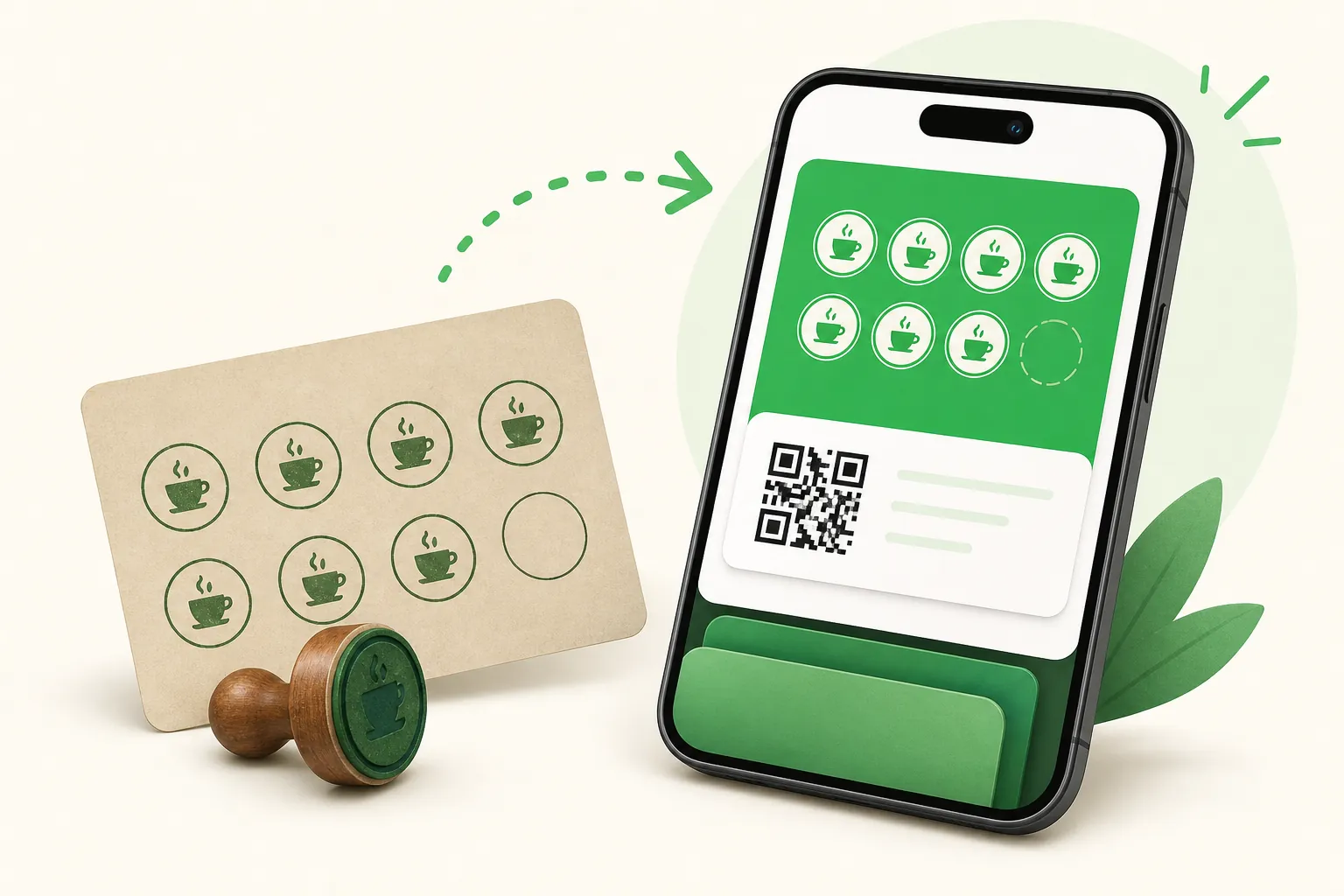
The mechanic hasn't aged: nine coffees, the tenth free. The cardstock has. The same counter, living in the phone, keeps what works and removes what gets in the way.
 Tutorial
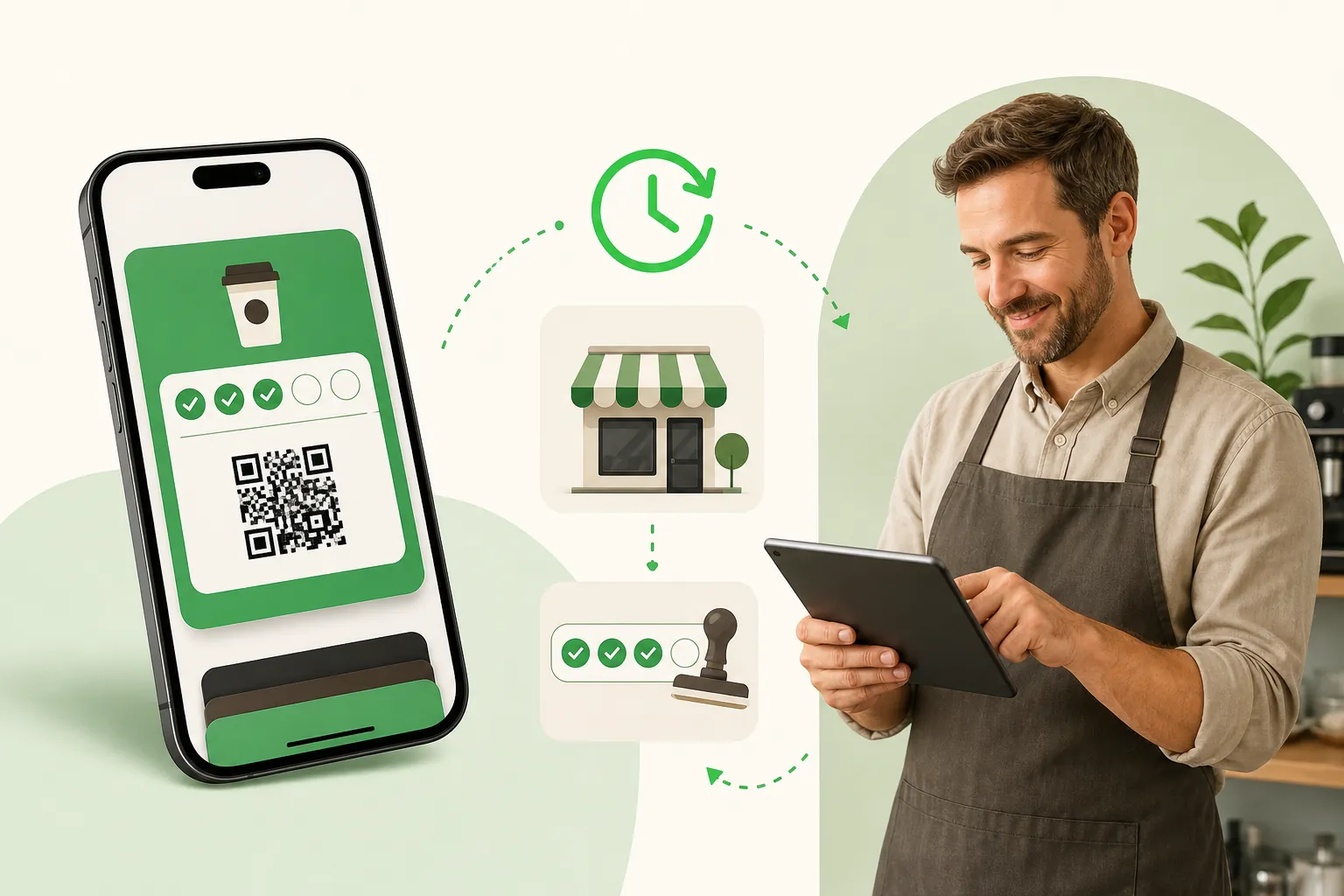
Put a real Apple Wallet loyalty card in your customers' phones — no developer, no hardware, and nothing for them to install. Here are the five steps, in order.