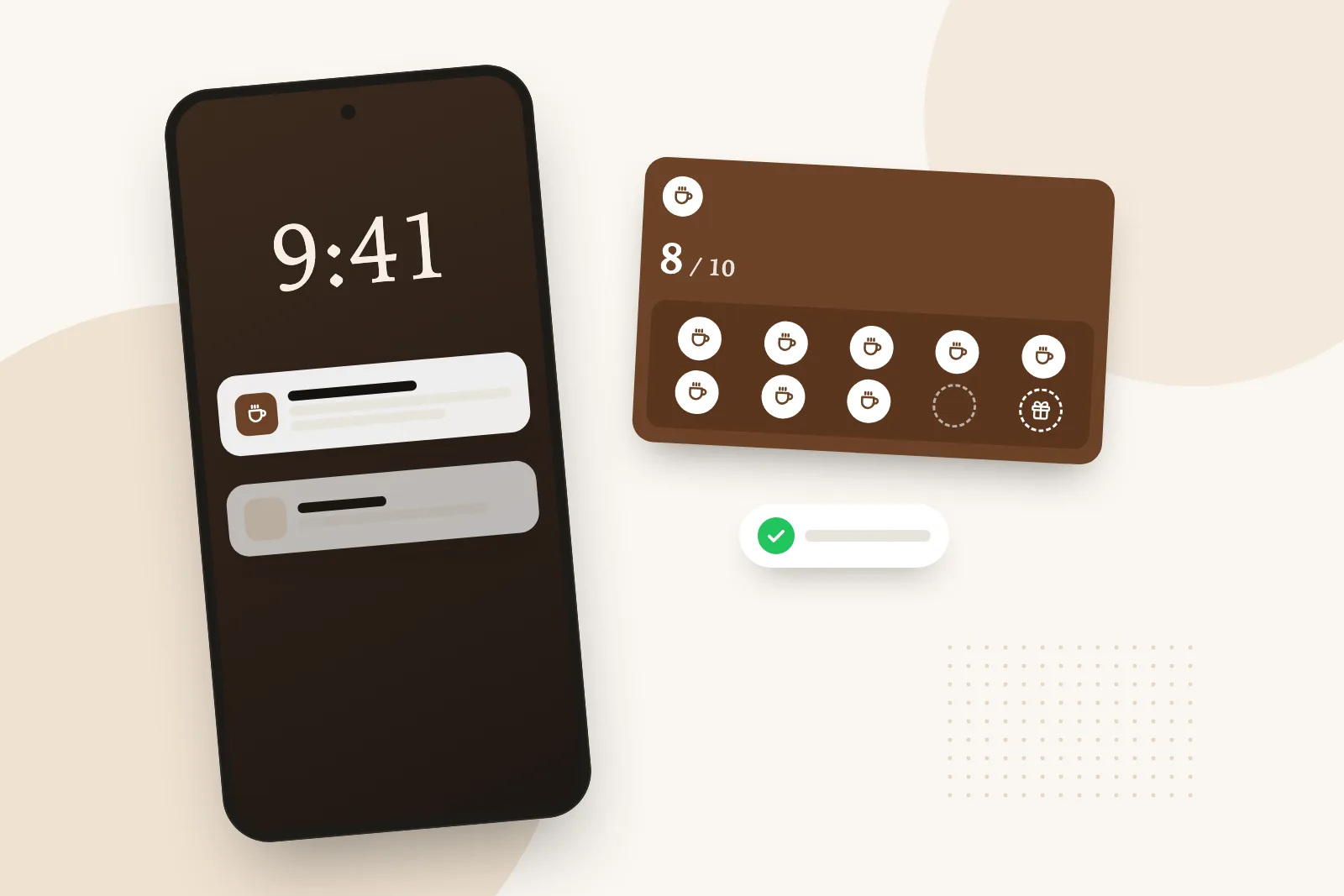
 Coffee shops
Coffee shop loyalty program: 10 ideas that work, with the math
How many stamps, which reward, and what a free coffee really costs you. A practical guide for independent coffee shops, with worked numbers and real research.
Your clients come back every few weeks, but nothing guarantees they come back to you. A loyalty card on their phone keeps count of their cuts, nudges the ones running late and lets every stylist stamp from their own phone.
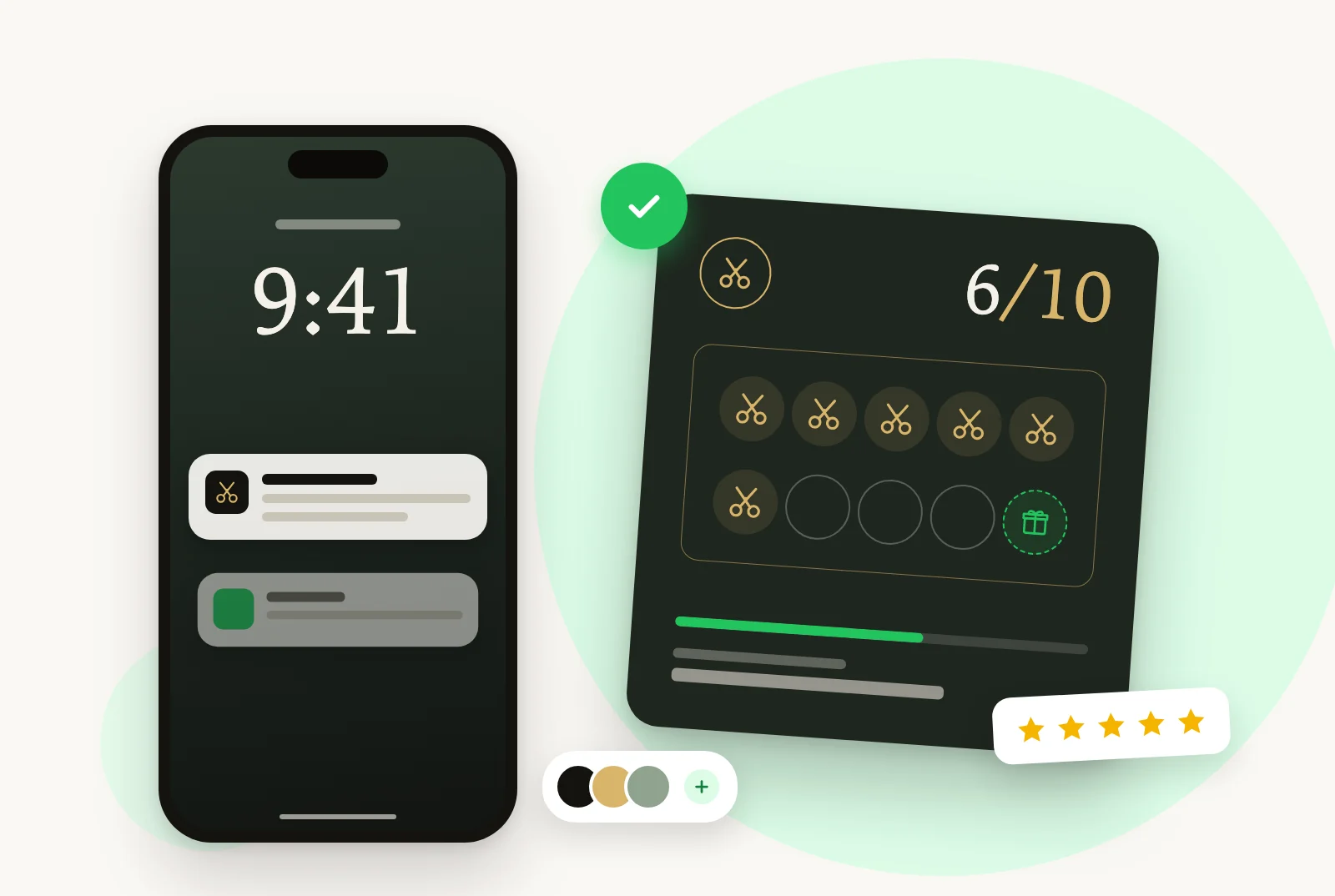
A barbershop client doesn’t think long before booking. He walks past a shop window, catches his reflection, and decides it’s time. And on that day he goes wherever is easiest: to you if you’re top of mind, to the place next door if they have an earlier slot.
That moment is the whole game of loyalty in hairdressing. Nobody needs convincing to come back for a haircut: their hair takes care of that. What they need is a reason to come back to you, and a reminder at the right time.
Few businesses have this luxury: the reason to come back grows on its own, a few millimetres a week. A short men’s cut, a skin fade or a sharp beard line lose their shape within weeks. A women’s cut, a colour or balayage last longer, but they too end up calling for a visit.
That rhythm is an advantage, and it hides a trap. A client who comes every three weeks visits you seventeen times a year. If he drifts to a competitor after a bad week, a long wait or simply a more convenient slot elsewhere, you don’t lose one or two visits: you lose a whole year of haircuts, and often those of the son or brother he used to bring along.
The salons that last aren’t necessarily the ones with the best scissor work. They’re the ones whose clients never have a reason to ask themselves the question.
The paper card has its place in plenty of shops. In a salon it suffers from three flaws you probably recognise.
A salon with several stylists adds one more problem: there’s only one ink stamp. It travels from chair to chair, gets lost under a pile of towels, and ends up living at the till.
StampyWallet puts your loyalty card in your clients' Apple Wallet or Google Wallet. Nothing to install for them, nothing to buy for you.
A poster with a QR code, at the till or on the mirror by the door. The client scans it with his phone camera, taps "Add", and your salon’s card sits next to his train tickets and boarding passes. No app to download, no account to create, no password.
The best moment is the end of the service, when the client takes one last look in the mirror. He’s happy, his phone is already in his hand to pay, and you can add the first stamp right away.
This is where a digital card changes the most for a salon. Every team member gets their own access, at no extra cost. The stylist who just finished a cut opens a web page on their phone, scans the client’s card and sees who’s in front of them and where they stand before confirming: "Karim, 7 → 8 of 10".
No shared tablet, no queue at the till for a stamp. If two stylists finish at the same time, each stamps their own client. And if the network drops at the wrong moment, the stamps go through as soon as it’s back.
The card writes on your clients' lock screen. It’s the part paper will never do, and the one that matters most in a trade built on rhythm:
These messages go out on their own, without you having to think about them between clients. You can also write to all your clients at once: a Saturday slot that just opened up, a new stylist joining the team, opening hours that change over the holidays.
The card doesn’t replace your booking tool, and doesn’t pretend to. It plays a different role: it brings your salon to mind for the client who hasn’t booked yet, just as his hair starts reminding him too.
The right reward is one the client wants and that costs you little, or earns you something back. A few formulas that work well in salons:
| Formula | For whom | Why it works |
|---|---|---|
| 10th cut free | Barbers, men’s cuts | Easy to understand, and the visit rhythm gets there within months |
| Free beard trim | Barbers | Introduces a service the client doesn’t always book |
| Free treatment or product | Mixed and women’s salons | The client leaves with a product from your shelf, and may buy it again |
| Tiers: 5th visit, 10th visit | Salons with varied services | A first reward close at hand, a better one later |
| Points based on spend | Colour, highlights, packages | Rewards spending rather than visits, when tickets vary a lot |
For a barber whose clients come every three weeks, a ten-stamp card fills up in six to seven months. Short enough to stay motivating, long enough for the reward to feel worth it. For a women’s salon where people come every two months, five or six stamps, or tiers, avoid a card nobody ever finishes.
One piece of advice for every salon: give two stamps at sign-up. An empty card makes nobody want anything; a card that’s already started makes people want to finish it.
A client who just got his free haircut is, at that exact moment, one of your happiest clients. It’s the right time to ask for a review, and that’s exactly what the card does: after the first reward, it invites him to leave a review on your Google listing.
For a salon, those reviews carry weight. Someone searching for "barber" or "hairdresser" nearby often compares stars before choosing. Asking loyal clients, at the moment they’re pleased, beats waiting for reviews to turn up by chance.
The dashboard shows you what the paper card never did:
For many salons it’s a surprise. You think you know your regulars, then discover that some of them haven’t been in for two months. Knowing early means you can write to them while there’s still time.
Data is hosted in France, in Strasbourg, with OVH, and the service is GDPR compliant. If a client asks what you hold on him, or wants it erased, there’s no file to rebuild: he can even delete his card and his data himself.
For birthdays, the day and month are enough. We’ll never ask for your clients' year of birth.
And if you ever stop your subscription, the cards already on your clients' phones keep working. Nothing switches off on their side overnight.
The trial lasts thirty days, free and with no commitment, with every Growth feature included. A card is required to start, nothing is charged during the trial, and you cancel in one click.
After that, three plans, before tax:
Pay yearly and you get two months free. Clients, cards and visits are unlimited, your team costs nothing extra, and there’s no setup fee. The details are on the pricing page.
The first week, in most salons, looks like this:
After a month, you know how many clients have the card, who has already come back, and who is starting to run late. Your clients already come back for their haircuts. The card makes sure they do it in your chair.
No. They scan the QR code with their phone camera and the card is added to Apple Wallet or Google Wallet, which are already on their phone. No app, no account, no password.
Yes. You invite your team members from your account, at no extra cost, and each one stamps from their own phone. There’s no terminal or tablet to buy or pass around.
The tenth cut free is still the easiest to understand. A free beard trim, or a care product, also works very well and often costs less. You can set up tiers, for example a small reward at the fifth visit and a better one at the tenth.
No, and that isn’t its job. Your clients keep booking as usual. The card counts visits, rewards loyal clients and reminds the late ones of your salon with a message on their lock screen.
The dashboard shows which regulars are drifting. On the Growth plan, an automatic message lands on their lock screen when they haven’t been back for a while, without you having to think about it.
Nothing is lost: his progress is stored on our side. He scans the QR code again on his new phone and finds his card exactly where he left it.
Declare your closures. Counters then follow your opening days: a client won’t be flagged as lost because the salon was shut for three weeks in August.
The cards already on your clients' phones keep working. Nothing switches off on their side.
Coffee shops
How many stamps, which reward, and what a free coffee really costs you. A practical guide for independent coffee shops, with worked numbers and real research.
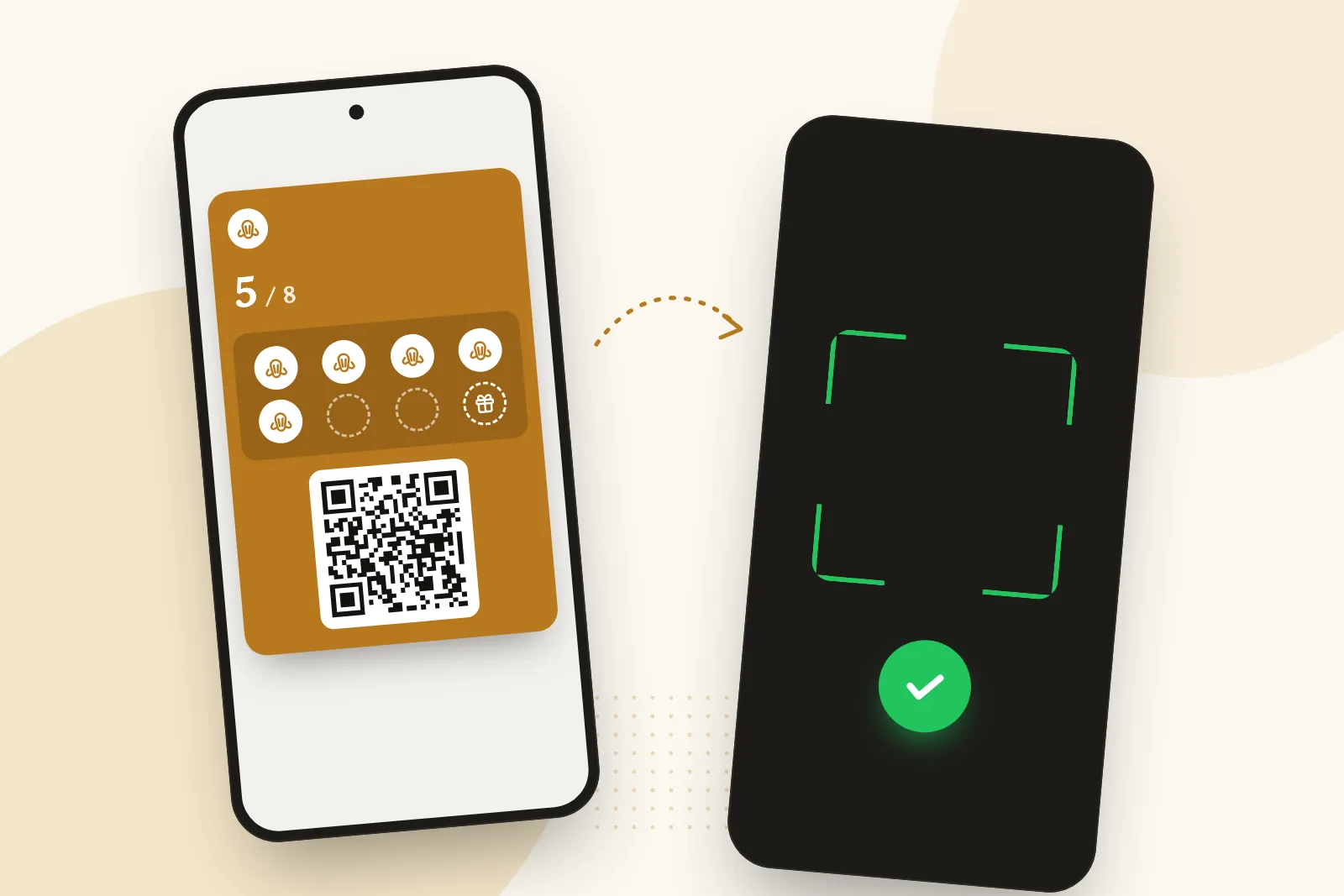 Bakeries
Which reward to give, how many stamps to ask for and what it really costs: a bakery loyalty card that survives the morning rush, on paper or in the phone.
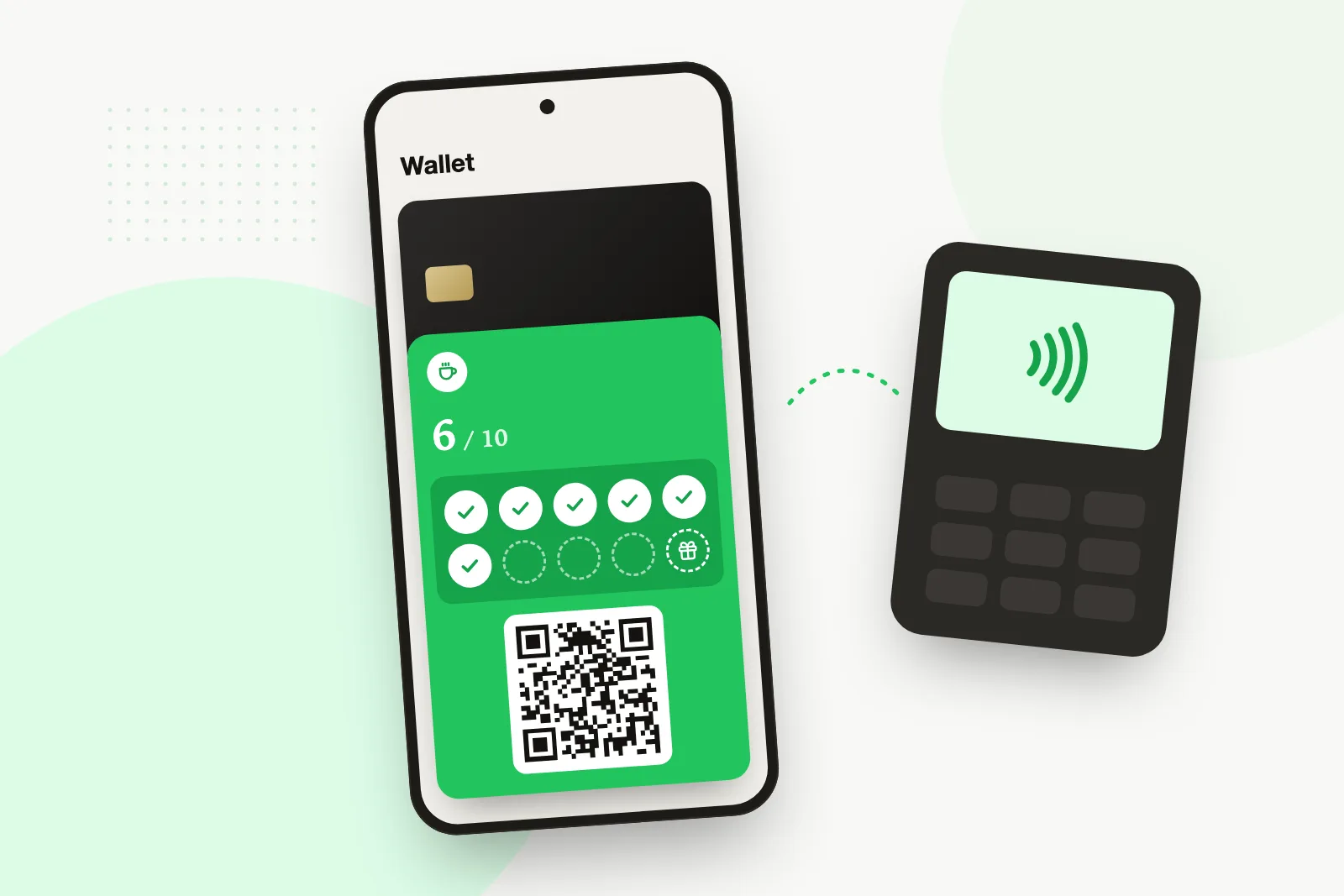 Guide
Guide
Apple Pay has no loyalty program for your shop, and one-tap loyalty needs certified NFC hardware. What really exists in 2026, and what works at a small counter.