You already did the hard work of getting someone through the door. The real challenge — and the real opportunity — is making sure they come back.
For independent cafes, florists, wellness studios, and small restaurants, repeat customers are the foundation of a sustainable business. They spend more per visit, they refer friends, and they cost far less to retain than new customers do to acquire. Yet most small merchants still rely on habit alone to bring people back, with no real system in place to encourage or reward return visits.
Here are practical, low-effort strategies you can start using today to build genuine customer loyalty — without a big marketing budget or complicated software.
Start With the Experience, Not the Discount
Before thinking about loyalty programs or promotions, get the basics right. Customers return to places where they feel recognized, comfortable, and well-served. That means:
- Remembering regulars. If someone orders the same thing every Tuesday, noticing that costs you nothing and means a lot to them.
- Consistency. People come back when they know what to expect. Inconsistent quality or service is one of the fastest ways to lose a regular.
- Fixing small frictions. A slow payment process, a confusing menu, or a hard-to-find entrance all chip away at the experience. Sort the small things before you invest in retention tactics.
None of this requires a tool. It requires attention.
Give People a Reason to Return — Not Just a Reason to Visit Once
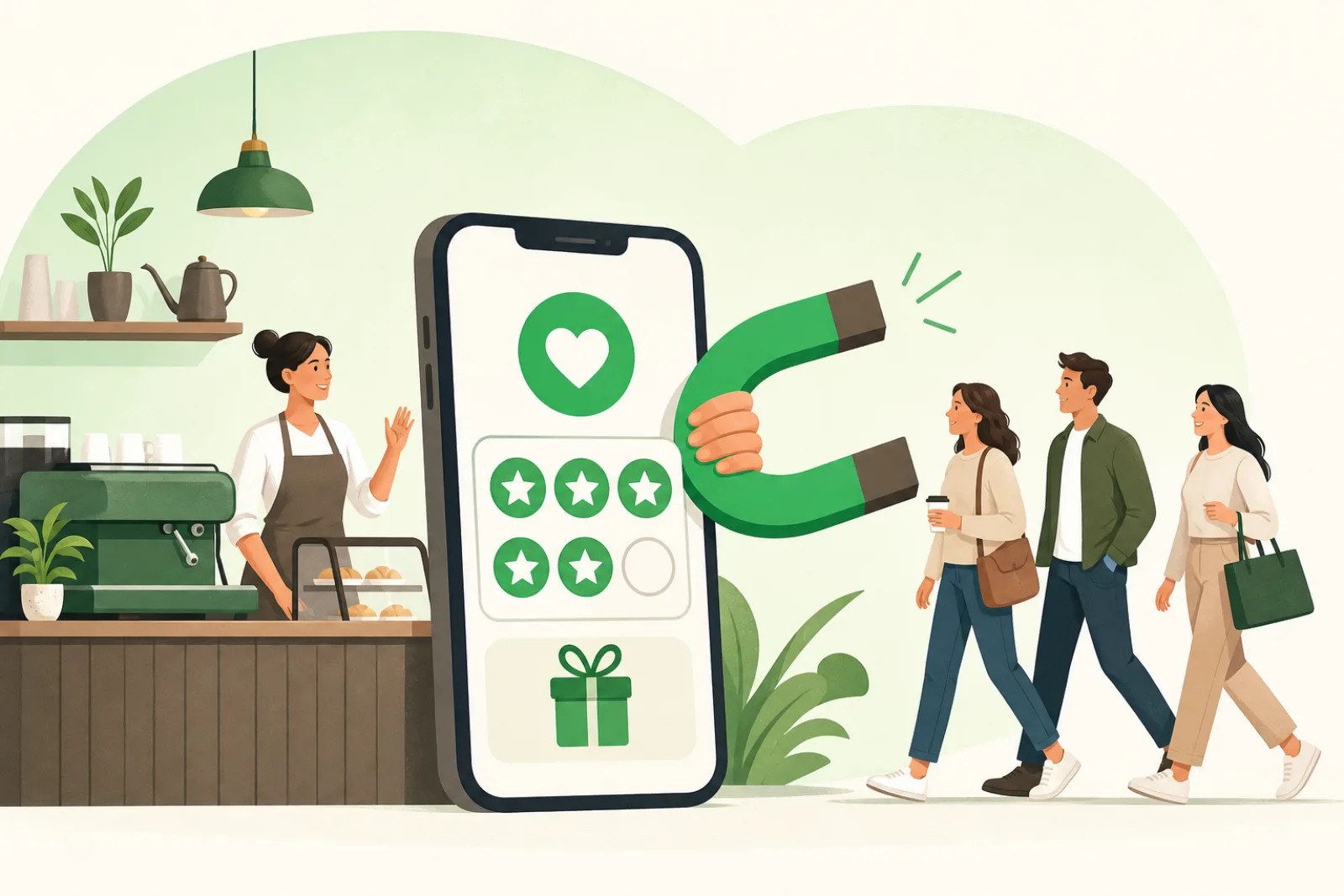
A one-time promotion brings people in. A loyalty program gives them a reason to choose you over the competitor down the street, again and again.
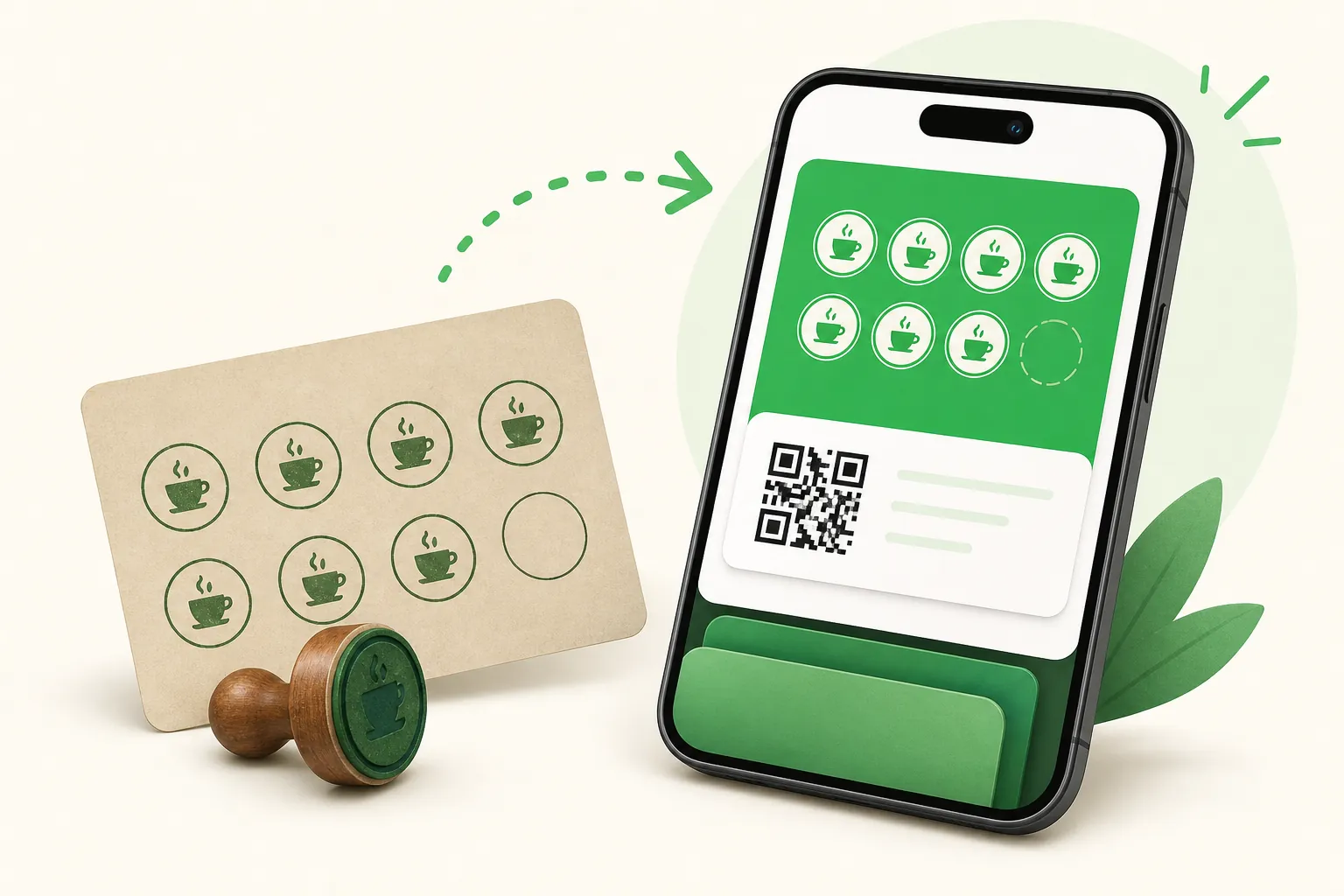
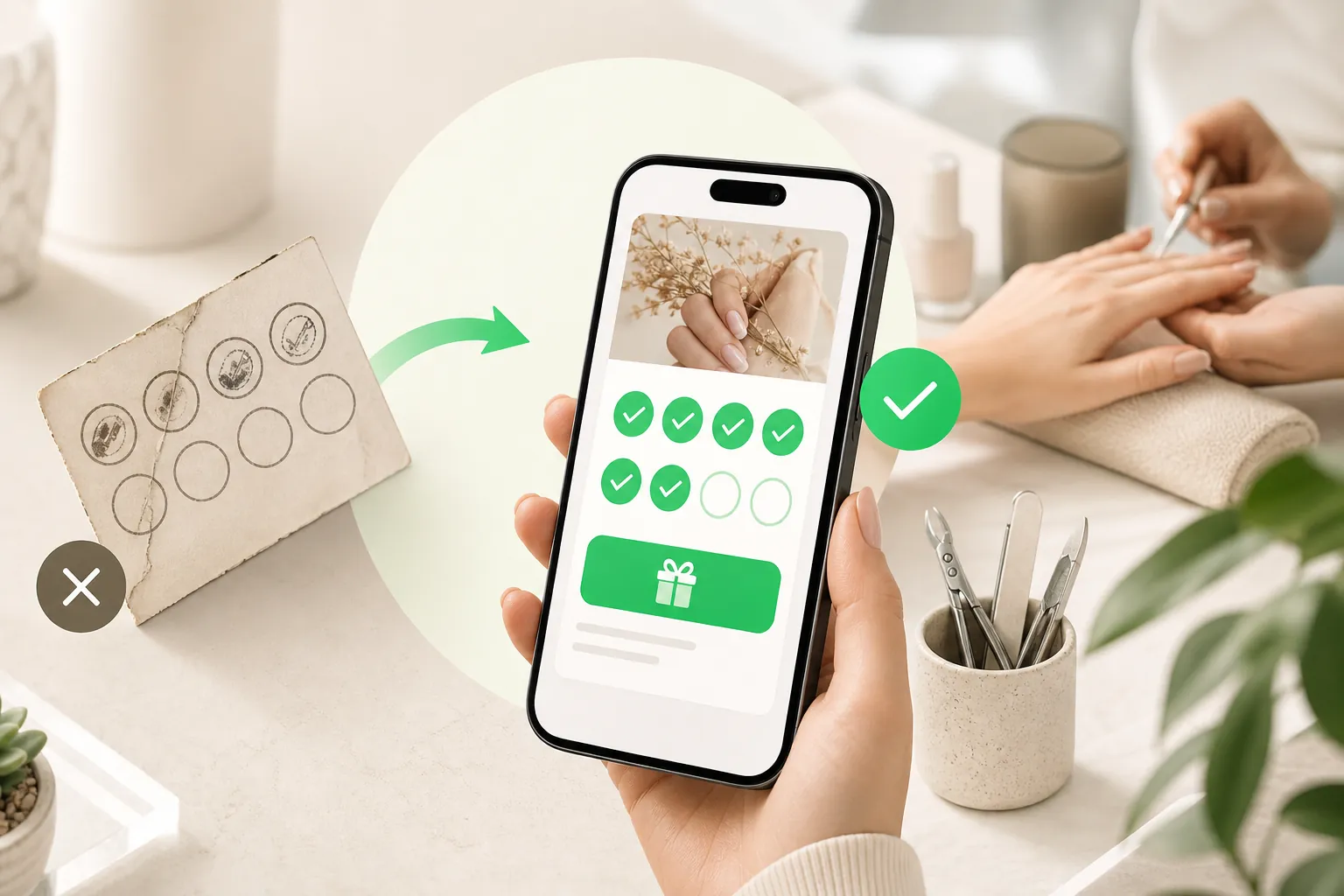
The classic paper stamp card still works in principle — it creates a sense of progress and gives the customer something to work toward. The problem is execution. Paper cards get lost, forgotten, or left at home. They’re easy to fake. And they tell you nothing about who your customers actually are or how often they visit.
The Case for a Digital Loyalty Card
A digital loyalty card solves most of the problems that make paper cards underperform. When the card lives in Apple Wallet or Google Wallet, it’s always on the customer’s phone. They don’t need to remember to bring it — it’s already there.
More importantly, a digital card lets you reach customers between visits. You can send a push notification directly to their lock screen when you have a slow afternoon, a new seasonal item, or a reward waiting to be claimed. That’s a direct line to your regulars that no paper card can offer.
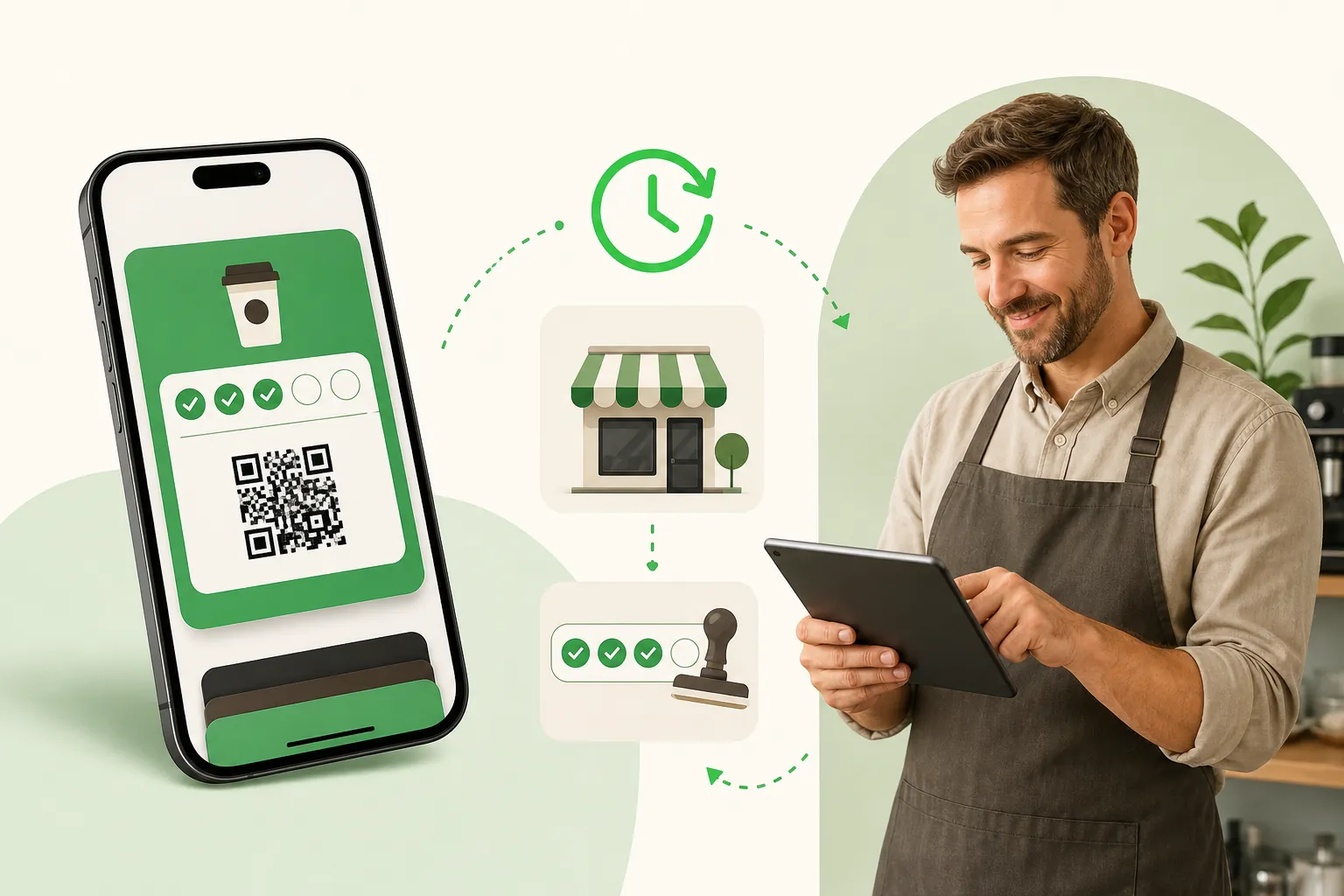
StampyWallet is built specifically for independent merchants who want this kind of loyalty program without the complexity. Customers add the card in about 3 seconds by scanning a QR code at your counter — no app download, no account creation, no friction. You manage everything from a browser dashboard, and stamps can be issued from any device with a browser, so any staff member can handle it.
Build Habits Around Your Natural Visit Cycle
Think about how often a typical customer naturally visits your business. A coffee shop might see regulars three or four times a week. A florist might see the same customer once a month. A massage studio might see clients every few weeks.
Your loyalty program should match that cycle. If you run a cafe and set a reward at 20 stamps, you’re asking for five weeks of daily visits before anything happens — that’s too long. A reward at 8 to 10 stamps keeps momentum going and makes progress feel achievable.
If your business sees customers less frequently, a points-based structure tends to work better. Every purchase earns points, and rewards are available at different thresholds, so occasional customers still have something to work toward even if they don’t visit weekly.
Use Quiet Periods Strategically
Every shop and cafe has slow days. Tuesday afternoons. The hour before closing. The first week of January.
Most merchants respond by doing nothing, or by posting something on social media that reaches a fraction of their audience. A better approach is to reach the people who already like you — your existing customers — directly.
With a digital loyalty program, you can send a push notification to your entire customer base in seconds. "Quiet afternoon — come in before 4pm and get a free pastry with any drink." That message lands on the lock screen of everyone who has your card, no algorithm required.
This is one of the most underused tools available to small merchants. Your regulars want to hear from you when you have something worth saying. A well-timed, genuine message will bring people in.
Identify At-Risk Customers Before You Lose Them
One of the quietest ways to lose revenue is gradual customer drift. A regular who used to come in twice a week starts coming in once, then once a month, then not at all. By the time you notice, they’re already someone else’s regular.
If you’re tracking visit frequency — even roughly — you can catch this pattern early. A customer who hasn’t visited in 30 days when they used to come in weekly is a signal worth acting on. A short, personal-feeling message ("We haven’t seen you in a while — here’s a little something to bring you back") can recover a meaningful number of those customers before they’re gone for good.
On the Growth plan, StampyWallet’s dashboard automatically groups customers into segments: regulars, at-risk, and near-reward. Automated win-back messages can be set to trigger when a customer goes quiet, so it happens without you having to monitor it manually.
Make Your Staff Part of the Retention Strategy
Your team is the most direct point of contact with your customers. A staff member who is warm, attentive, and consistent does more for retention than any promotion.
In practice, that means:
- Training staff to mention the loyalty card to new customers at the point of sale, not just when asked.
- Empowering staff to resolve small complaints on the spot. A customer whose minor issue is handled graciously is often more loyal afterward than one who never had a problem at all.
- Encouraging staff to note regulars' preferences. Even a simple note in a shared doc or POS can help the next person on shift give a familiar customer a familiar experience.
Loyalty is built in small moments. Most of those moments involve your team, not your marketing.
Stay Present Between Visits
Customers forget about businesses they don’t hear from — not because they don’t like you, but because life is busy and attention is short.
Staying present doesn’t mean posting every day on Instagram (though that helps). It means having a reliable channel to reach your customers when you have something worth saying. A push notification to wallet card holders is one of the most direct options available, because it bypasses the social feed entirely and lands on the lock screen.
Keep messages infrequent enough to feel valuable. Once or twice a week at most. And make sure each one has a genuine reason behind it: a new menu item, a seasonal offer, a reward reminder, a quiet-day special.
Reduce the Friction of Coming Back
Sometimes customers don’t return simply because returning feels like effort. The more you can reduce that friction, the more likely they are to choose you.
That applies to:
- Your opening hours. Are they easy to find? Are they accurate on Google Maps?
- Your queue. Is there anything you can do to make the wait feel shorter or more pleasant?
- Your loyalty program. Does it require the customer to remember a card, download an app, or explain themselves to a new staff member?
The best loyalty programs are effectively invisible — customers just get rewarded for doing what they were already going to do.
Measure What’s Actually Working
You can’t improve what you don’t track. At a minimum, you should have a rough sense of how many customers visit once and never return, how many visit regularly, and whether that ratio is moving in the right direction.
A digital loyalty program gives you this data as a byproduct of normal operation. Every stamp issued is a data point. Over time, you can see which customers are your most valuable, which are drifting, and whether a specific promotion or message actually changed behavior.
This isn’t about becoming a data analyst. It’s about having enough visibility to make better decisions about where to focus your time and money.
Putting It Together
Keeping customers coming back is less about clever tactics and more about consistent, genuine attention. A great experience, a reliable product, a team that makes people feel welcome, and a simple way to reward loyalty — that combination is hard to beat.
If you’re ready to move beyond paper stamp cards and give your customers a loyalty card that lives in their phone, StampyWallet offers a 30-day free trial with no commitment. You can have your digital loyalty card set up and your QR code on the counter the same day you sign up.
Frequently Asked Questions
What is the most effective way to keep customers coming back to a small shop or cafe?
The most effective approach combines a consistently good experience with a simple, low-friction loyalty program. Customers return when they feel recognized and when they have a tangible reason to choose you over a competitor. A digital loyalty card that rewards repeat visits — and lets you reach customers between visits with push notifications — supports both goals without requiring significant time or budget.
Do loyalty programs actually work for small independent businesses?
Yes, when they’re easy to use. The main reason loyalty programs underperform for small businesses is friction: cards that get lost, apps that customers won’t download, or rewards that take too long to earn. A digital loyalty card that lives in Apple Wallet or Google Wallet removes most of that friction because it’s always on the customer’s phone and requires no account or app to set up.
How many stamps or points should I require before giving a reward?
Match the threshold to your natural visit cycle. For a coffee shop where customers come in multiple times a week, 8 to 10 stamps is a reasonable target. For businesses with less frequent visits, a points-based structure with multiple reward tiers tends to work better. The goal is to make progress feel achievable, not distant.
How can I reach customers on slow days without relying on social media?
Push notifications sent directly to customers' lock screens are one of the most direct options available. If your customers have your digital loyalty card in their Apple Wallet or Google Wallet, you can send a message to all of them — or a targeted segment — in seconds. Unlike social media posts, these messages don’t depend on an algorithm to reach your audience.
What should I do when a regular customer stops coming in?
Act early. A customer who hasn’t visited in 30 days when they used to come in weekly is a signal worth acting on. A short, personal-feeling message with a small incentive to return can recover a meaningful number of lapsed customers. Automated win-back messages, available on the Growth plan in StampyWallet, can handle this automatically so you don’t have to monitor it yourself.
Do I need to buy special hardware to run a digital loyalty program?
Not with StampyWallet. You print a QR code from your browser dashboard and place it on your counter. Customers scan it to add the card to their phone. Stamps are issued from any browser — a phone, tablet, or computer — so no dedicated device or hardware purchase is needed.
Is a digital loyalty card hard for older customers to use?
The scan-to-wallet flow is simpler than most people expect. Scanning a QR code and tapping "Add to Wallet" takes a few seconds and works on any modern iPhone or Android phone. Customers don’t need to create an account or download an app. For anyone less comfortable with technology, a staff member can walk them through it once — and the card is there permanently after that.
The StampyWallet team
Digital loyalty cards for independent shops
 Beauty