 Tips
Tips
How to keep customers coming back to your shop or cafe
Practical, low-effort strategies to build genuine customer loyalty — without a big marketing budget or complicated software.
Fill your tables without cheapening your menu — reward the visit rather than the amount spent, and bring back the ones drifting away.

Running a restaurant means solving the same problem every week: getting people to come back without handing out discounts that eat into your margin.
The discount reflex is understandable. A "10% off your next visit" looks like an easy answer. But it teaches customers to wait for promotions, it attracts bargain hunters who almost never turn into regulars, and it quietly damages the value of your menu. There is a better way.
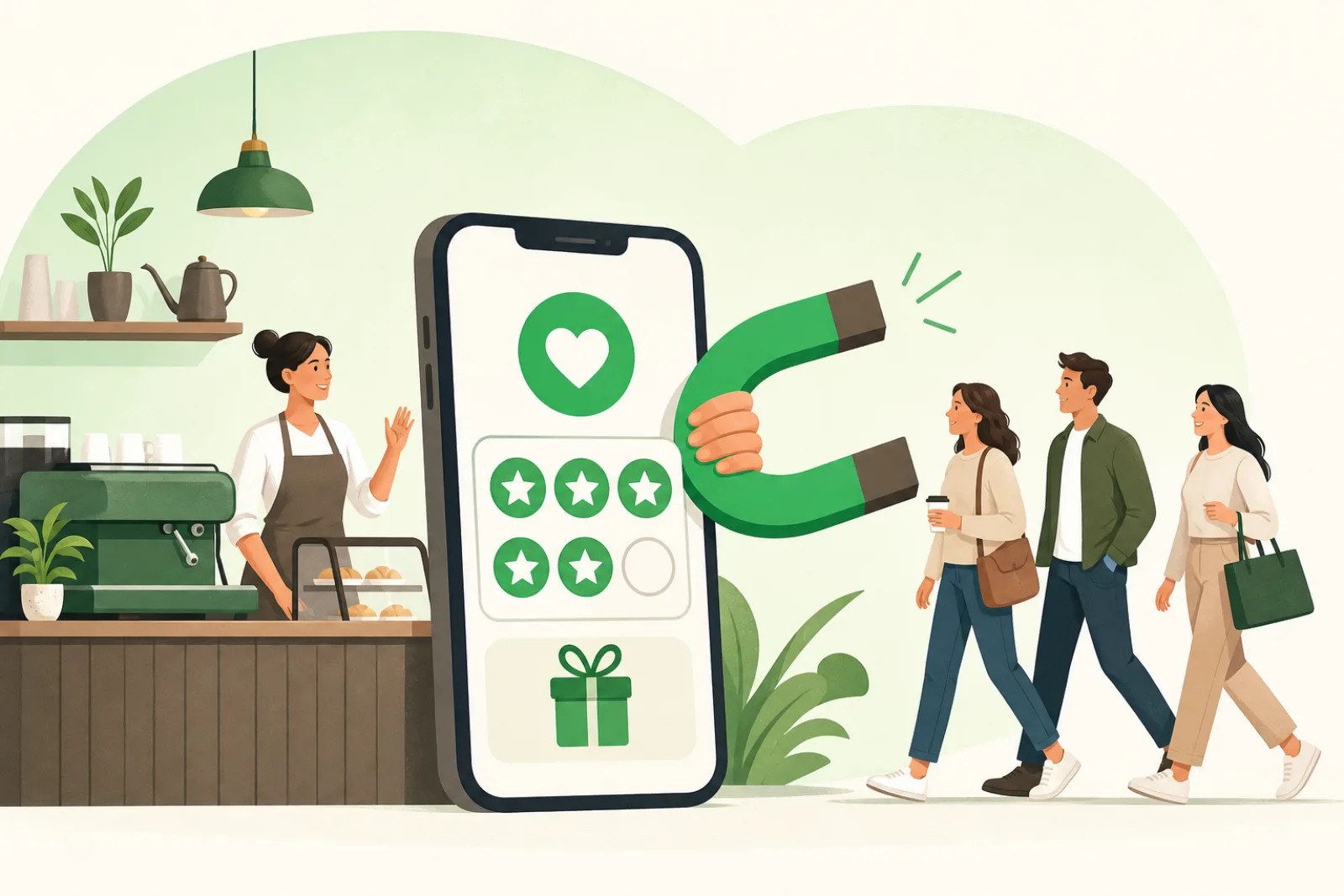
A well-designed loyalty program fills tables by rewarding the behaviour you already want — the visit — without giving up margin on every cover.
A discount fixes a short-term problem by creating a lasting one. When the main reason to come back is a lower price, you haven’t built loyalty: you’ve built a conditional relationship, and it ends the day the place next door offers a bigger discount.
Loyalty works differently. It rewards frequency. The customer who earns a coffee after ten visits doesn’t come back because the tenth visit costs less: he comes back because he has a goal in progress. Over time, that difference in behaviour shows up in revenue per customer.
It all comes down to one principle: build the program around value, not around discount.
Points programs calculated on spend are common in large chains, but they add friction for an independent: the customer has to track points, do mental arithmetic, wait months before any of it counts.
The stamp is simpler and more effective at this scale. One visit, one stamp. Ten stamps, a reward. Everyone understands it immediately, and progress is visible at every visit.
The best restaurant rewards have high perceived value and a small food cost. A few ideas:
None of these means discounting a main course. Each one creates a moment of generosity the customer remembers — and talks about.
The number one reason a restaurant loyalty program fails is friction at the door. If you have to install an app, fill in a form or carry around a cardboard card you will end up losing, most customers give up.
Yet a customer who has just eaten well is in the best possible frame of mind to join your program. It has to be a single gesture.
A QR code on the counter or on the table: the customer points their phone camera at it, and the loyalty card goes straight into Google Wallet or Apple Wallet — nothing to install, nothing to fill in. The card is in their pocket before they leave the table.
That is exactly how StampyWallet brings customers in: one QR scanned, and the card lives in the phone. And the restaurant owner stamps from any phone, with no hardware and no hook-up to the till.
A cardboard card is passive: it sleeps in a wallet and does nothing between two visits. A card in the phone can work for you while the customer is nowhere near the restaurant.
The message that lands on the lock screen is one of the most under-used tools in independent restaurants. The right sentence at the right moment — a reminder that only one stamp stands between them and a free dessert — can turn a quiet Tuesday into a full room.
The key is who you write to. Writing to everyone every week becomes noise. Writing to the ones who haven’t been in for thirty days, or to the ones about to earn their reward, is relevant — and nobody holds a well-timed reminder against you.
A restaurant owner knows their regulars by sight. But without numbers, there is no way to act on that at scale. A digital card says what cardboard never could:
With that, you make real decisions. If your customers come back every eighteen days on average and one group hasn’t been in for thirty-five, that is a precise set of people to win back — not a vague hope that they will wander in on their own.
Putting the reward too far away. Twenty stamps for a free dish means twenty visits before the first thank you. The feeling of progress matters: ten stamps towards a modest but real reward beat the never-ending programs.
Changing the rule halfway through. Promising a dessert at the tenth stamp and then changing the reward damages trust. Set something you can keep, and keep it.
Forgetting to mention it. A little sign tucked away in a drawer signs nobody up. The QR code in plain sight, a sentence when the bill arrives, a simple instruction to the team: that is all it takes.
Ignoring the numbers. Signing customers up and never looking at what it produces means using half the tool. Even one simple figure — how many customers have come more than three times — tells you whether the program is working.
Some loyalty tools require the customer to install a dedicated app. That is a real barrier: few people install something new for a single restaurant, especially after one or two visits.
Asking for an install at sign-up means capturing a fraction of the customers a simple QR code would have brought in.
Cards that live in Google Wallet or Apple Wallet are in another category: they sit inside an app the customer already uses. The card doesn’t get buried in a folder of forgotten apps — it appears when it is useful.
That is all. No extra management software, no new till, no discount.
The aim is twofold: regulars should feel recognised, and occasional visitors should have a reason to come back. A well-run program does both without touching a single price on the menu.
No. The most effective programs reward the visit with something free — a dessert, a coffee — with high perceived value and a small food cost. Discounting a dish teaches customers to wait for lower prices; something free creates a moment of generosity without eroding your margin.
Ten is a common and effective threshold for an independent: reachable in a reasonable time for a regular, with progress you can feel at every visit. Beyond twenty, the goal looks too far off and interest falls away.
A card in Google Wallet or Apple Wallet survives far better than cardboard, which gets lost or stays at home. It sits in an app the customer already opens, and reminders — a reward within reach, a long absence — bring it back to the lock screen at the right moment.
The one that looks generous to the customer and costs you little: a dessert, a coffee, a side. Avoid discounting a main course — it teaches people to wait for lower prices and devalues the menu in everyone’s eyes.
Tips
Practical, low-effort strategies to build genuine customer loyalty — without a big marketing budget or complicated software.
 Beauty
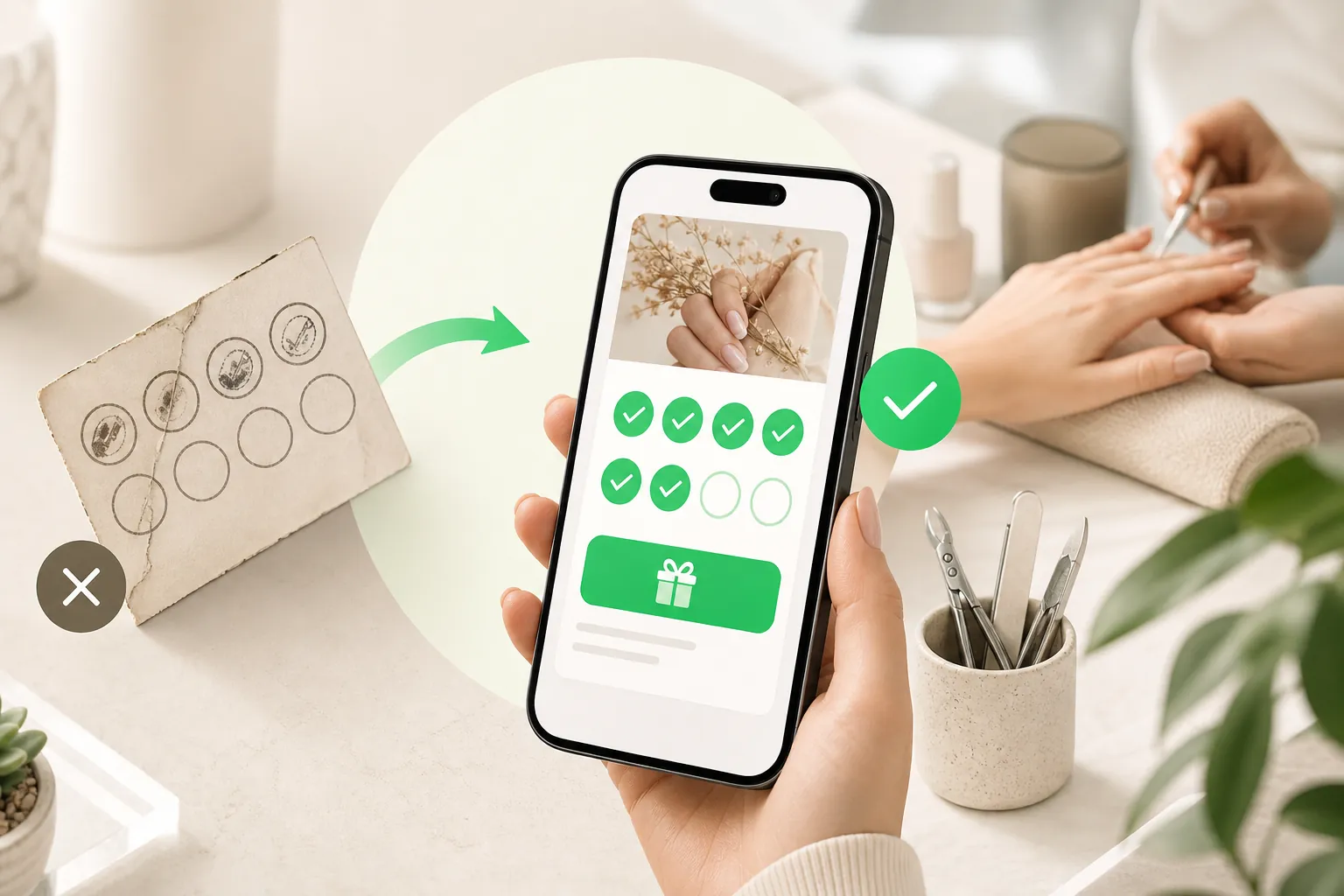
Your clients already come back every two or three weeks. A digital loyalty card turns that habit into something you can see and act on — no forgotten card, no hardware, no extra work at the desk.
 Guide
Guide
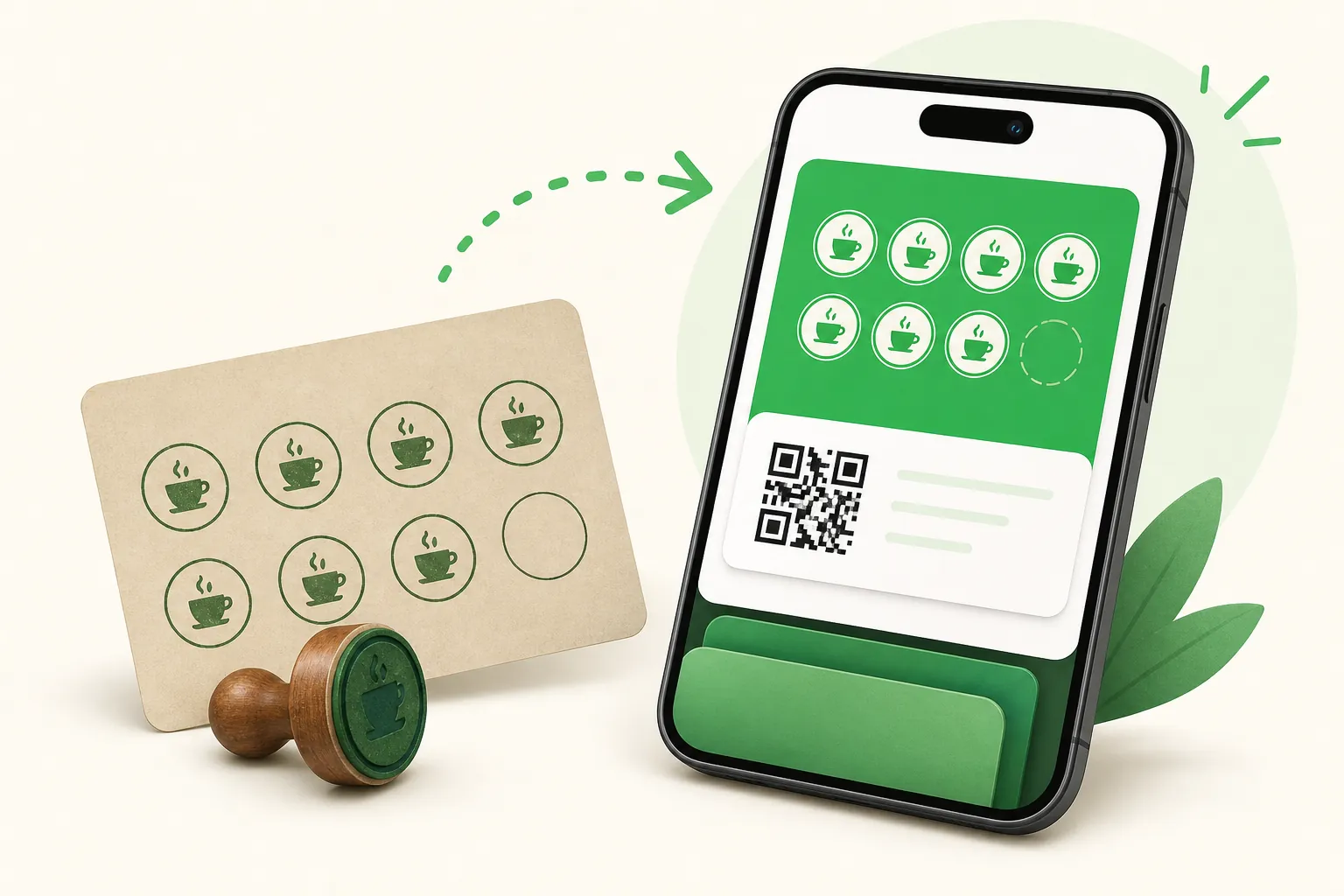
The mechanic hasn't aged: nine coffees, the tenth free. The cardstock has. The same counter, living in the phone, keeps what works and removes what gets in the way.