 Tips
Tips
How to keep customers coming back to your shop or cafe
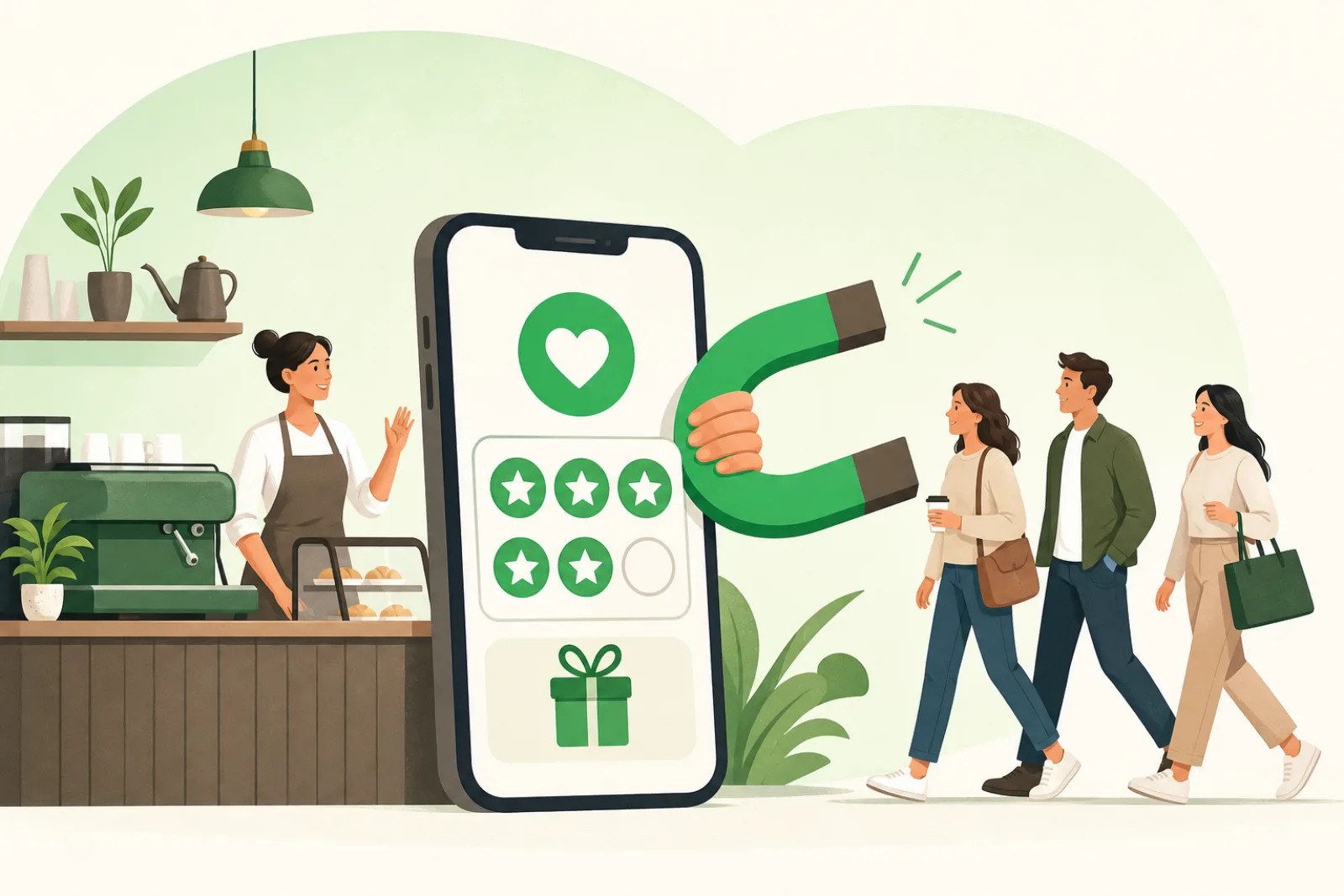
Practical, low-effort strategies to build genuine customer loyalty — without a big marketing budget or complicated software.
Wallet, dedicated app, shared platform or good old cardboard — an honest comparison of the four approaches, what each one really costs and who it is for.
Searching for "the best loyalty card app" returns a hundred results that all say the same thing. The real problem isn’t finding a tool: it is knowing which of the four existing models suits your business, because they don’t solve the same problem and they don’t cost anything like the same.
Here are the four, with no fake ranking and no invented stars.
This is the most recent model, and the one we side with. The card is added to Apple Wallet or Google Wallet — the apps already installed on your customers' phones, the ones where their boarding passes live.
Who it’s for: shops with passing trade, where the customer has neither the time nor the desire to install anything. Café, bakery, restaurant, salon.
What it fixes: the customer installs nothing, creates no account, and never loses their card again. It updates itself when you stamp, and it can come back on their lock screen when they walk past your door.
What it doesn’t fix: you don’t get an app under your own name on the App Store. If your goal is an icon with your branding on your customers' home screen, this isn’t the model.
The real cost: a monthly subscription, generally between €15 and €50 excl. VAT depending on the offer. No hardware.
A real app, under your name, that your customers download.
Who it’s for: chains with several locations and customers who already come very often — gyms, regional chains.
What it fixes: you own the channel. Notifications, content, online ordering: it all sits in a place that belongs to you.
What it doesn’t fix — and this is the blind spot: you have to convince every customer to download it. For a neighbourhood shop, that is the tallest step in the whole journey. Someone buying a €1.80 coffee is not going to install an app for it.
The real cost: four or five figures of development, then annual maintenance. iOS and Android updates never stop.
A single app that gathers the cards of hundreds of businesses. Your customer installs it once, and finds your card there among the others.
Who it’s for: businesses located where the platform is already well known.
What it fixes: you benefit from an existing user base, and the cost of entry is low.
What it doesn’t fix: you are one logo among a hundred. And your customers are not yours — the platform holds the relationship, sets the rules, and may one day offer to let you pay for a better spot.
The real cost: often a commission or a modest subscription. The price is paid elsewhere: in dependence.
It deserves a mention, because it still works and costs almost nothing to print.
Who it’s for: businesses with very low footfall, or those whose customers don’t have smartphones.
What it doesn’t fix: one customer in two loses it before filling it. They walk out with a fresh card, start again from zero, get tired of it — and you never see any of it, because cardboard reports nothing back. You don’t know who comes back, how often, or who has stopped coming.
A cardboard card doesn’t cost you a hundred euros in printing. It costs you everything you could have known about your customers.
Forget feature grids. Five questions are enough:
StampyWallet is the first type: a card in the wallet, nothing for the customer to install, a QR code on the counter and your phone to stamp with. €24 excl. VAT per month per venue, everything included, with no cap on the number of customers. Thirty days free, no commitment.
It is not the right choice if you want your own app on the App Store, if you need deep integration with a till (we don’t do that yet), or if your customers don’t have smartphones — in which case keep your cardboard cards for them, the two coexist very well.
And the others, by name? We laid out their figures one by one: the comparison of ten tools on the market — Zerosix, Fidme, Captain Wallet, Hey Pongo, Fidaly, Passcard, Loyeo, FidWallet, Loopy Loyalty and Stamp Me — with each one’s entry price, setup fee and trial length, read off their own pricing pages and dated.
The one that asks your customers to install nothing. For a café, a bakery or a restaurant, a card that is added to the wallet already on the phone is adopted far more widely than an app to download, because it removes the one step where most people are lost.
Budget between €15 and €50 excl. VAT per month for a wallet-based card, with no hardware. A dedicated app runs into thousands of euros of development plus annual maintenance. Shared platforms are cheaper to get into but are paid for in dependence.
No, not if you choose a card that lives in the wallet. It is added to Apple Wallet or Google Wallet, already installed on their phone. They scan a QR code and tap "Add": nothing else, no account to create.
No. A smartphone is enough to scan your customers' cards, and a printed sign is enough for them to get theirs. No tablet, no reader, no hardware subscription.
That depends entirely on the provider, and it is the question to ask before signing. With StampyWallet, the cards keep working and you can keep stamping; only access to the statistics and to sending messages stops.
It can be, provided you collect the minimum. We only ask for the customer’s first name, and it is optional, and they can delete their card and their data themselves from the card. With any provider, check what is collected, where it is hosted, and how a customer obtains erasure.
Tips
Practical, low-effort strategies to build genuine customer loyalty — without a big marketing budget or complicated software.
 Beauty
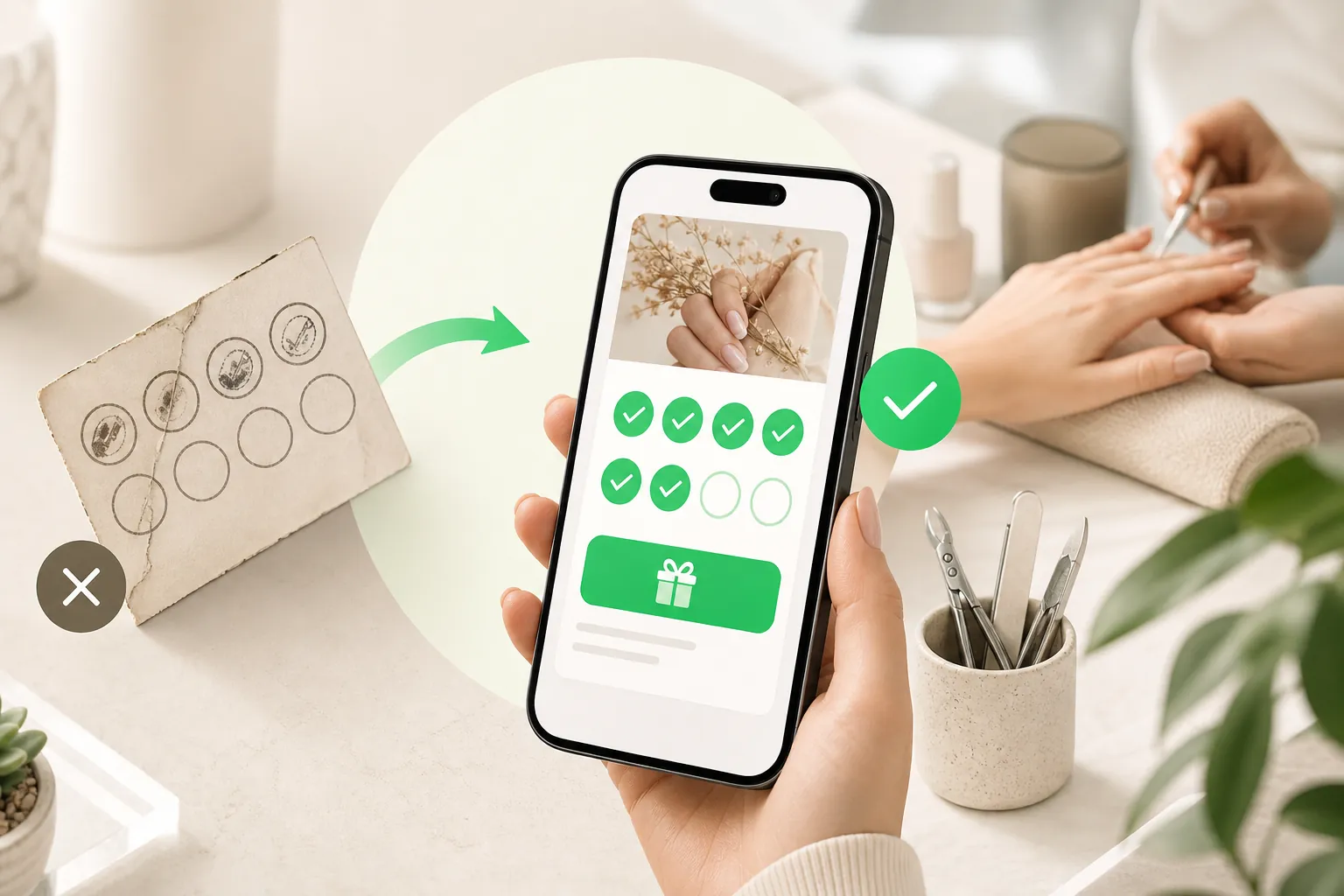
Your clients already come back every two or three weeks. A digital loyalty card turns that habit into something you can see and act on — no forgotten card, no hardware, no extra work at the desk.
 Guide
Guide
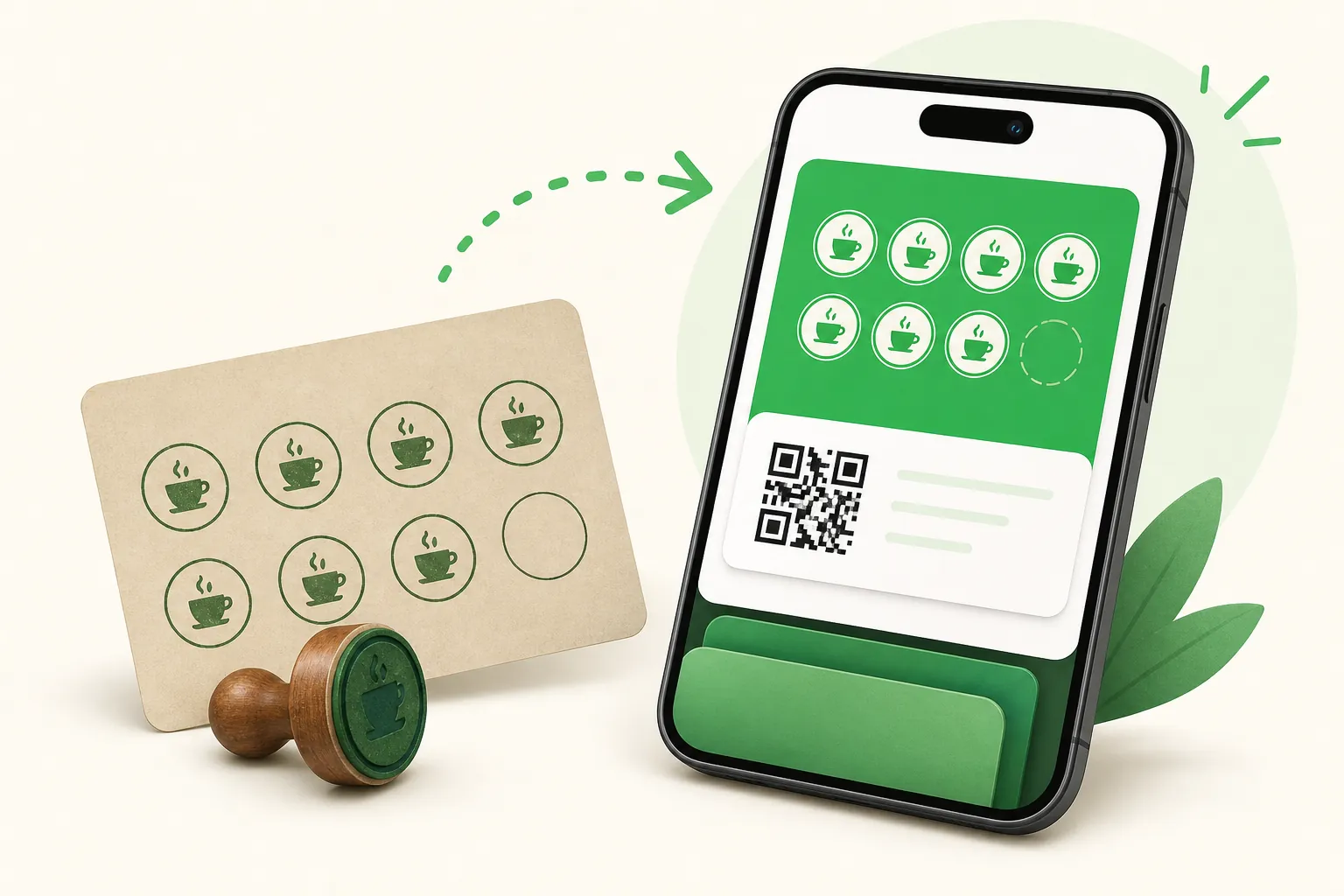
The mechanic hasn't aged: nine coffees, the tenth free. The cardstock has. The same counter, living in the phone, keeps what works and removes what gets in the way.